
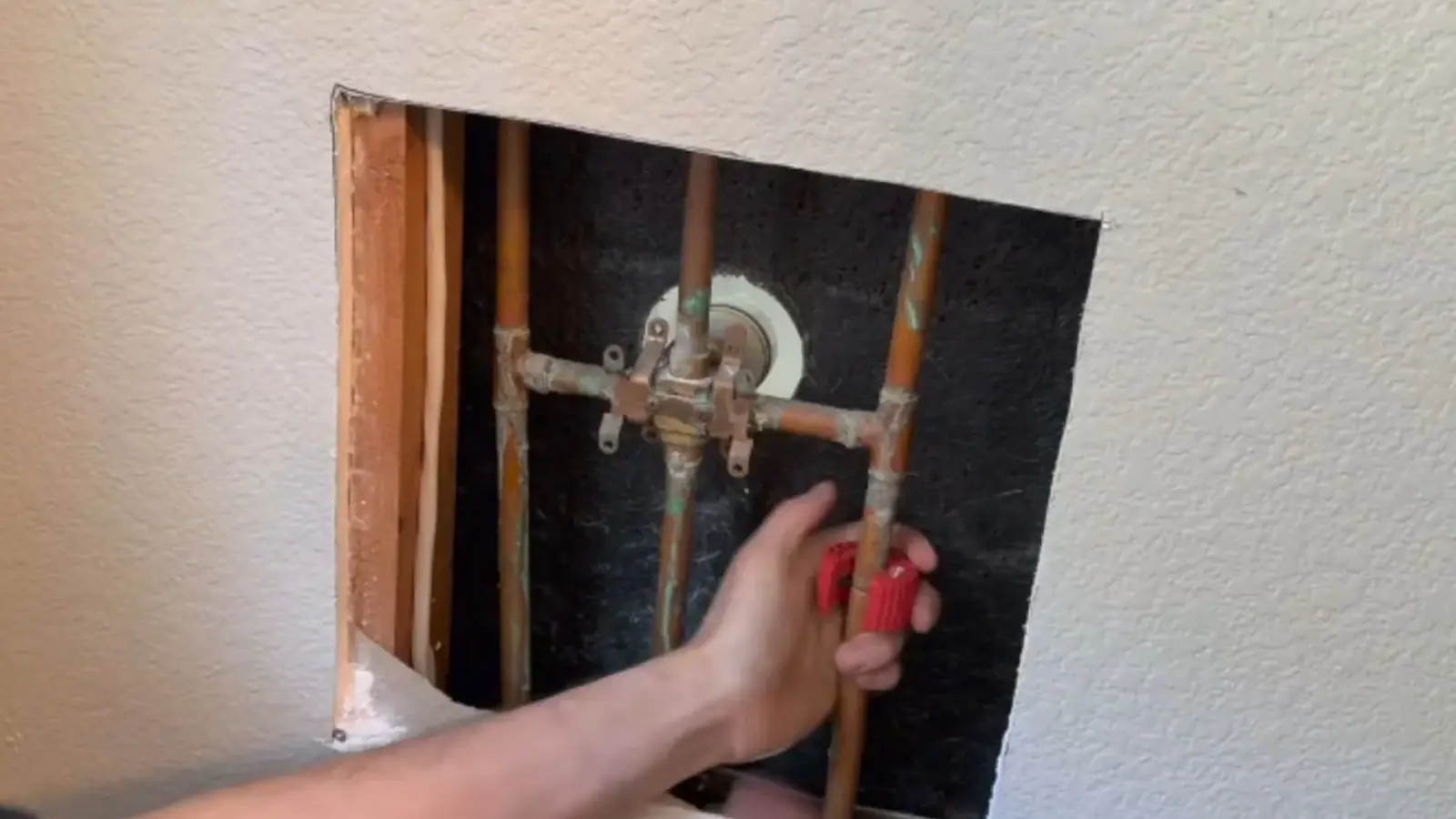
Start with the symptom, not the price
A drip from the spout, a leak around the handle and water behind the wall are three different problems. They have different causes and very different costs. Pinning down which one you have is the best way to understand the price before anyone gives you a number.
- Drip from the showerhead after you turn it off often means a worn cartridge or seat.
- Water around the handle points to a failed seal or loose trim.
- Water at the tub spout can mean a diverter problem.
- Stains on the ceiling below or a damp wall suggest a leak in the supply pipes or valve body.
- Hot and cold mixing wrongly after the leak starts often means a bad cartridge.
Our faucet repair team starts by identifying the valve brand and type, since that determines both the parts and the labor.
It also helps to know whether you have a single-handle or two-handle shower. A single-handle valve uses one cartridge that mixes hot and cold, and it is the most common modern setup. A two-handle shower has separate stems, so a drip may come from only one of them. Knowing which you have lets us bring the right parts and gives you a better idea of the work involved before the visit.
The cost factors, from small to large
Labor is shaped by the unknowns. Pulling a cartridge that comes out in a minute is a short job. Pulling one that has seized into the valve body after years of mineral buildup can take much longer, and it may damage the body. We cannot always know which one it is until the handle is off, which is why we explain the possible outcomes before starting.
| Job | What is involved | Main cost drivers |
|---|---|---|
| Cartridge replacement | Remove trim, pull cartridge, install new | Brand, part availability, corroded stems |
| Trim and seal repair | Replace handle seals, washers or escutcheon | Parts, caulk and tile edge |
| Diverter repair | Replace tub spout or diverter valve | Spout type, wall mounting |
| Valve body replacement | Cut open wall, replace valve | Wall access, tile, pipe type, finish work |
| Pipe leak repair | Find and fix leak behind the wall | Pipe material, access, drywall or tile repair |
What moves the price
Valve brand and age
Common cartridges are easy to stock. Old or discontinued valves may need a rebuild kit or full replacement.
Wall access
If there is an access panel behind the wall, work is simple. If not, tile or drywall must be opened.
Water shutoff
A fixture shutoff makes it easy. Without one, the main must be closed, which can affect others in a building.
Corrosion
A frozen or scaled stem can take much longer to remove than a clean one.
Finish repair
Opening tile adds repair work. We tell you what is included before starting.
Local note
Local note: buildings with shared walls
Atlantic City has roughly 20,000 housing units, and many are condominiums, apartments and rowhouses.
What that means for you: a leak behind a shower wall in a multi-unit building can reach a neighbor's ceiling and may involve building rules or insurance. Tell management quickly, and shut off the water supply if you can find the valve.
Why delay raises the bill
A dripping shower wastes water, but the larger cost is hidden. Moisture behind the wall softens drywall, loosens tile and invites mold. A cartridge swap becomes a wall repair if the leak runs for months.
If you can see a slow drip, call sooner rather than later. If the wall feels soft or you see staining below, call now. See our leak detection page for how we trace leaks that are not visible.
Water you cannot see is the expensive kind. A slow leak inside a wall can run for a long time before a stain appears, and by then the framing, insulation and finish may all be wet. If your water bill climbs for no clear reason, or a bathroom smells musty, ask us to look at the supply lines as well as the faucet.
Shower leaking and you are unsure why? Call and describe where the water shows up.
Call (609) 547-1417What you can do before the visit
- Close the shower's shutoff valve if there is one, or the main if not.
- Take a photo of the handle, trim and any brand name you can see.
- Note whether the drip occurs when hot only, cold only, or both.
- Check the wall and ceiling nearby for stains, soft spots or bubbling paint.
- Clear the shower so the technician can work, and lay down towels in the bathroom.
Do not keep forcing a handle that is stuck. You can crack a plastic stem or twist a valve inside the wall.
Parts, access and repair-or-replace
If the valve is common and the cartridge is the problem, repair is straightforward. If the valve body is corroded, cracked or leaking at its connections, replacement may be the better value, especially if the trim is old. Replacing the trim and valve together can also let you update the style.
Some jobs involve two visits, such as when parts need to be ordered. We tell you if that applies and give a clear price before work starts. We offer same-day appointments when available.
Replacing the whole valve is also a chance to add useful features. A valve with a pressure-balancing cartridge helps prevent sudden temperature swings when someone flushes a toilet or starts a washing machine. Ask what options fit your wall, since the depth of the old valve limits what can go in without extra work.
Insurance and permits
Homeowners policies usually cover sudden and accidental water damage but not wear or maintenance. A cartridge that wears out is maintenance. Hidden damage from a sudden pipe break may be a claim, so ask your insurer. Permit rules vary by job, so ask your local construction office.
We are licensed and insured and serve Ventnor City and Pleasantville along with Atlantic City. Call (609) 547-1417.
Quick answers
It depends on the valve type, whether the wall must be opened, the parts and the timing. A cartridge swap is much smaller than a valve replacement. We give a clear price before work starts.
Often yes, if you can identify the brand and shut off the water. Corroded stems and unusual valves make it harder, and forcing parts can damage the valve body.
A worn cartridge, damaged seat or debris in the valve usually causes it. Replacing the cartridge often fixes it. Hot-only or cold-only drips point to one side of the valve.
Not usually, unless water is coming through a ceiling or wall. In that case close the water supply and call. For hidden leaks, our leak detection page explains how we trace them.
Not for cartridge or trim repairs. A valve body replacement or a pipe leak behind the wall may need an opening. We explain what is likely before we start.
Shut off the water if you can, tell building management and your insurer, and call us. Many Atlantic City homes are condos, apartments or rowhouses, so leaks can travel. We can document the cause in plain language.