
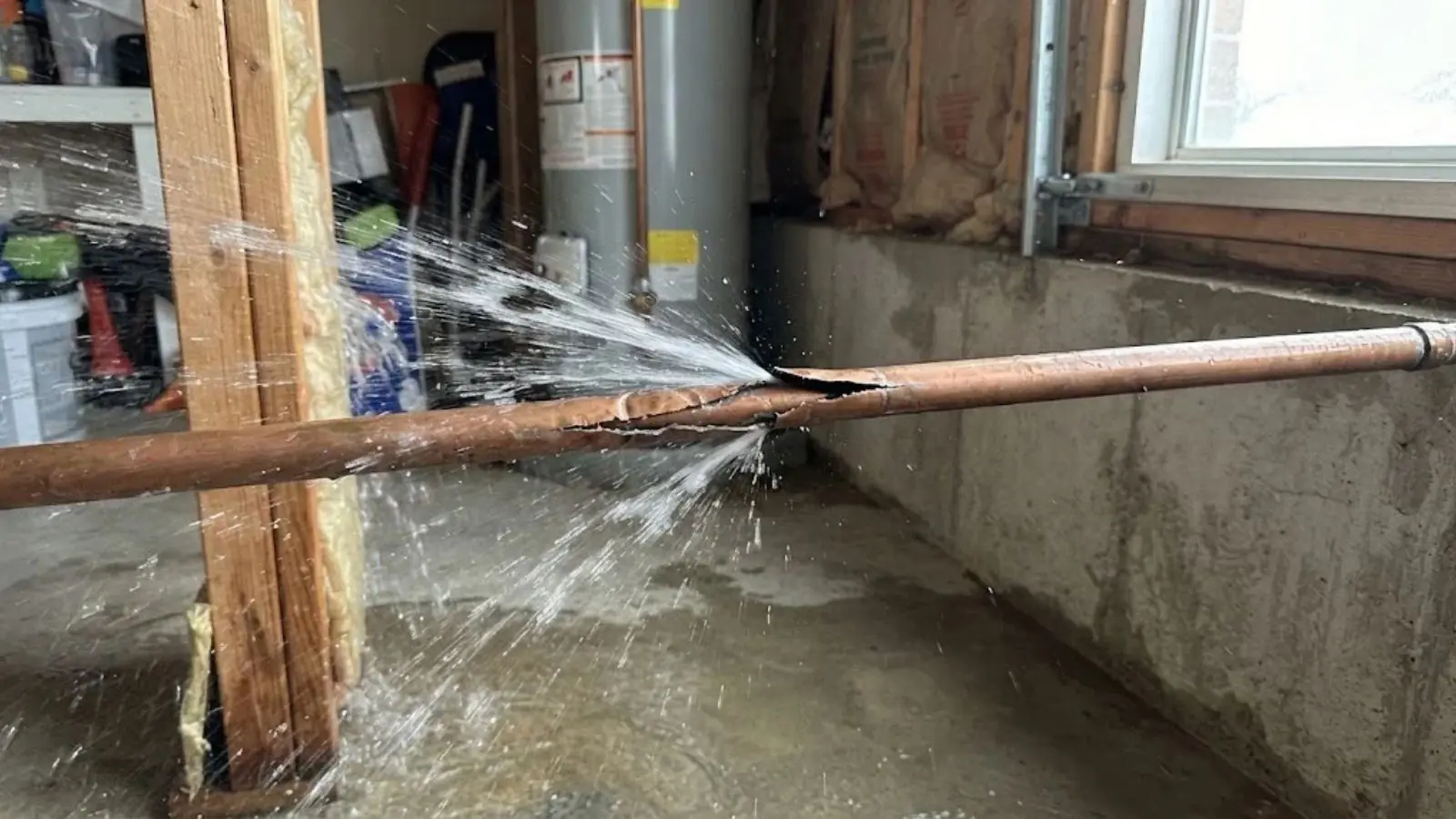
The first five minutes matter most
What you do before a plumber reaches you decides how much of the house gets wet. Work through this list in order and stop at any step that feels unsafe.
- Close the main water shutoff, usually near the meter, where the line enters the basement or in a utility closet. Turn it clockwise until it stops.
- Open the lowest faucet in the house to drain what is left in the pipes.
- If water is near outlets, a panel or appliances, switch off power at the breaker only if you can reach it while standing on dry floor. Otherwise stay out and call.
- Move rugs, electronics and paper up and away from the wet area.
- Photograph the damage and the pipe before anything is touched. Your insurer will want them.
If you cannot find or turn the main valve, tell us when you call. A stuck valve is a repair of its own, and we can talk you through other ways to slow the water. If you suspect gas near the wet area, leave on foot and call South Jersey Gas at 1-800-582-7060 or 911 before you phone a plumber.
Water on the floor right now? Shut off the main and call us, any hour, any day.
Call (609) 547-1417When a burst pipe is an emergency
If water is flowing and you cannot stop it, treat it as an emergency. The same goes for a pipe that has split inside a wall, a ceiling that is bulging with water, or any leak that continues after the main is closed. A weeping joint that you can contain with a bucket is urgent but not a flood, and we can often handle it with a same-day appointment when available.
After hours, the call goes to our dispatch line and the job is triaged by how much water is moving. We do not promise arrival times, but we do tell you honestly what we can do tonight and what can wait until morning. A related symptom with no visible burst may be a slow hidden leak, which is what our leak detection service is for.
What the repair looks like
A plumber starts by isolating the damaged section so the rest of the house keeps water where possible. The failed length is cut out, the ends are cleaned and a new section is joined in with fittings suited to the pipe material. Then the line is pressurized and watched for weeping before anything is closed up.
If the pipe is old and brittle in more than one place, a spot repair may only move the leak to the next weak joint. We tell you plainly when a run is worn out, and explain what repiping would involve compared with fixing one section.
| Material | How it fails | Typical fix |
|---|---|---|
| Copper | Pinholes, freeze splits, corroded joints | Cut out and sweat in a new section |
| PEX | Cracks at fittings, freeze swelling | Replace the section with crimped or expansion fittings |
| Galvanized steel | Rust from inside, narrowed bore | Replace the run, spot repair rarely lasts |
| Cast iron drain | Cracks, rusted-through bottom | Cut out and couple in new pipe |
| CPVC or PVC | Cracks from stress or sun | Cut out and glue a new length |
Frozen pipes in an Atlantic City winter
The airport has recorded a low of minus 11 F, and winter snowfall here typically totals 12 to 18 inches between November and April. A cold snap does not need to be that extreme to split a pipe in an unheated crawlspace, an exterior wall or a vacant unit. Water expands as it freezes, and the split often opens only once the ice melts, so the flood can start after the weather warms up.
If a pipe is frozen but has not burst, open the faucet slightly, warm the area with a hair dryer on low or a space heater placed well away from anything flammable, and never use a flame. If you see frost on the pipe or no water at one tap, treat the pipe as already damaged until it is checked. Seasonal rentals and vacant homes are the most exposed because nobody notices until the damage is done.
Cast iron and older drain lines
Burst water lines get the attention, but old cast iron drains crack too, and the result is a different kind of mess. A cracked drain leaks only when it carries water, so stains show up after laundry or a shower. We repair a cracked section by cutting it out and fitting a new piece, or we recommend replacement when the pipe is scaled and thin along its length.
Repair or replace the pipe
| Situation | Lean toward |
|---|---|
| One failure on otherwise sound pipe | Spot repair |
| Several pinholes within a few feet | Replace that run |
| Whole-house galvanized or old copper failing repeatedly | Repiping plan |
| Burst on the buried line outside | See service line repair |
Many Atlantic City buildings are older condos, rowhouses and converted homes, so the answer depends on what is behind the wall. We look at the surrounding pipe before quoting, and the price is clear before work starts. Burst pipe calls from nearby towns like Absecon get the same approach.
What affects the cost of burst pipe repair
Pipe material
Copper, PEX and cast iron use different parts and different labor.
Access
A pipe in an open basement ceiling is faster to reach than one inside a finished wall.
Extent of the damage
One split section costs less than a run that is failing along its length.
Water removal and drywall
We stop and repair the pipe. Drying and finish work may be a separate trade.
After-hours work
The time of the call can shape the price, so ask for the figure before work starts.
Sudden bursts are the usual covered event under many homeowners policies. Worn pipe itself usually is not. Read your policy and call your insurer early.
We give you a clear price before work starts. Call (609) 547-1417.
Questions about burst pipe repair in Atlantic City
Yes. The emergency line is open 24/7, including holidays. Close the main shutoff, then call (609) 547-1417. We triage by how much water is moving, and we will tell you honestly what we can do tonight versus what should be scheduled for the next available slot.
Usually where the water line enters the building, often near the meter, in a basement, utility closet or garage. In condos it may be inside the unit or shared at the building level. Find it before you need it, and tag it so everyone in the home knows.
Many homeowners policies cover sudden and accidental water damage, which includes most bursts. Wear, corrosion and slow leaks are usually excluded. Ask your insurer before repairs begin and keep photos. We can describe the cause of the failure in plain language for your claim.
Keep heat on in cold weather, open cabinet doors under sinks on exterior walls, and let a faucet drip during hard freezes. If a pipe is already frozen, thaw it slowly and watch for leaks. If it has split, shut off the main and call us.
Sometimes there is an access panel, but usually a small opening is needed to reach the damage. We cut only what is necessary and explain the plan first. Finish work like drywall and paint is typically a separate trade after the pipe is fixed.
If the burst is on the hot side or the house will be without water for a while, yes. Turn the heater to off or pilot so it does not run dry. If you notice the tank itself leaking, our water heater repair team can check it.