
If sewage is already coming up, stop all water use and keep people away from the affected floor. Call (609) 547-1417 for sewer line repair, and we will work out whether the first visit should be a cleaning to restore flow or a camera look to find the break. Repair choices come after the pipe has been seen.
Sewer line failure: what to do first
- Stop using water. A cracked line leaks into the soil, and a blocked one backs up into the house.
- If the yard is wet or a patch of ground has sunk over the line, do not dig it yourself and keep children away.
- Call 811 before any digging so buried gas, water and electric lines are marked.
- Photograph the damage and note when the symptoms started, for your insurer and for us.
- If a gas smell is present at any point, leave on foot and call South Jersey Gas at 1-800-582-7060 or 911 before calling us.
The emergency line runs 24/7, and same-day appointments are offered when available. Whatever the hour, the first moves are the same: stop the water, then plan a camera look.
Signs the line is failing, not just clogged
One backup is often a clog. A pattern is different. Repeated backups after cleaning, a wet or unusually green patch in the yard, a sunken spot, a sewage smell outside or a drain that gurgles when no one is using water all point to damage. Cleaning clears the symptom but leaves the break in place, so a line showing these signs should be looked at, not just cleared again. If you only need the line cleared, see sewer line cleaning.
Camera first, then a decision
A repair price built on a guess tends to change once the ground is open. A camera inspection can show the pipe material, where the problem sits and how far along the line it runs, and those three facts decide which repair fits. Our sewer inspection page describes that step.
| Option | What it involves | Fits when | Limits |
|---|---|---|---|
| Spot repair | Dig down and replace one failed section | One short break in otherwise sound pipe | Digging, surface restoration, other sections remain old |
| Trenchless lining | A resin-soaked liner cured inside the existing pipe | Cracks, root entry, minor joint problems in a continuous line | Not for collapsed or badly offset pipe, and the line must be cleanable |
| Pipe bursting | New pipe pulled through as the old one breaks apart | Whole run needs replacing with limited digging | Needs entry pits and suitable soil |
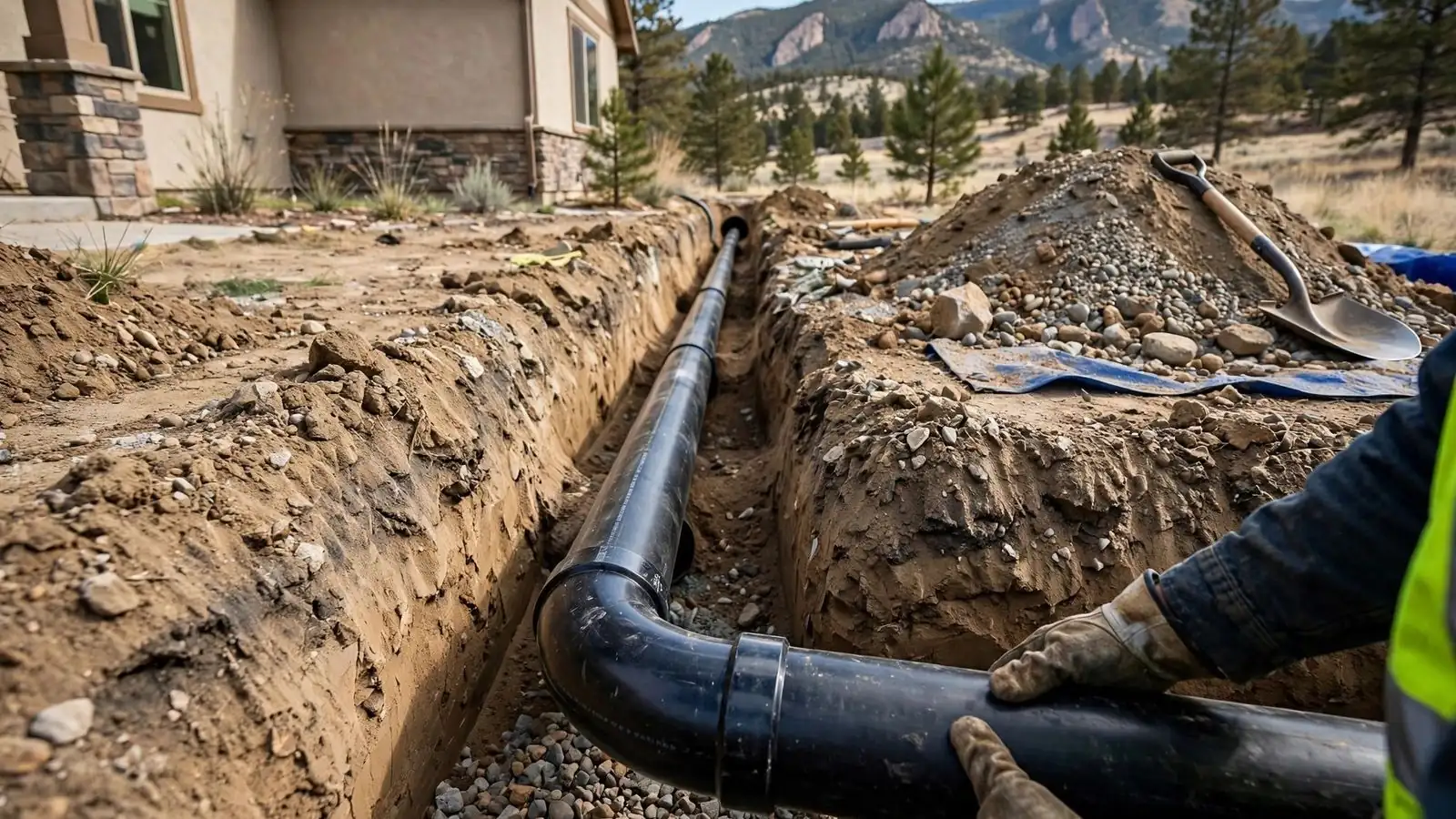
| Full dig and replace | Open trench, new pipe along the whole run | Collapsed, bellied or heavily damaged line | Most disruptive, with the longest restoration |
Not sure whether it needs a repair or a cleaning? Call and describe the pattern.
Call (609) 547-1417Lining versus digging: the honest trade-offs
Lining avoids a long trench, which helps if the pipe runs under a driveway, a slab, landscaping or a finished basement floor. It needs a pipe that is continuous and can be thoroughly cleaned first, and the liner slightly reduces the pipe diameter. If the pipe has collapsed, dropped or shifted too far at a joint, lining is the wrong tool.
Digging gives a new pipe on the correct slope, and lets us fix a bellied or offset section. The cost is disruption: open ground, a restored surface and more days on site. We explain which route the camera supports, and we tell you if more than one will work so you can compare.
Roots and why they return
Roots seek moisture and slip into the pipe through small cracks and loose joints. Cutting them back, or hydro jetting the line, restores flow for a while. Unless the entry point is sealed by lining or repair, roots usually come back. That is the difference between cleaning and repairing, and it is why a camera look matters after a second backup.
What repair involves on a barrier-island lot
Atlantic City sits at about 7 feet in elevation on Absecon Island, and tidal flooding is a documented fact here. For a repair, that means a deep trench may take on water, and the contractor may need pumps or shoring. We cannot say what the groundwater is on your lot, so we ask for the camera findings and site access before quoting.
If a repair is on your lot, ask whether the trench depth, any pumping and the restoration are included in the price you are given. Permit rules vary by job, so ask your local construction office what applies. New Jersey's Uniform Construction Code governs plumbing work, and the local construction official enforces it.
Who owns which section
The lateral runs from your building to the main, and where your responsibility ends and the city's begins is something to confirm before you commit to a repair. We do not assert ownership by street. Ask the city or ACMUA, and give them any camera footage you have that shows how far from the cleanout the problem sits.
Septic areas and city sewer
Some properties in outlying areas may use septic systems rather than city sewer, and we cannot say which. We do not offer a septic page here. If yours is on septic, ask your township which rules apply, and tell us on the call, since a septic line and a sewer lateral are different problems.
What affects the cost of sewer line repair
Depth and length
A short, shallow break is a smaller project than a long, deep run.
Pipe material
Cast iron, clay, plastic and fiber pipe each need different materials and methods.
Access and surface
Digging through a lawn is simpler than through concrete, pavement or a finished floor.
Water in the trench
Pumping or shoring adds equipment and time on a low lot.
Permits and timing
Permit needs depend on the job and the local office. The time of day or week of the visit can also affect the price, and the figure is given before work starts.
A sewer line that fails from age or roots is typically a maintenance issue. Ask your insurer what applies and whether a sewer line add-on exists.
You get a clear price before work starts. To discuss your line, call (609) 547-1417.
A leaking drain pipe inside the house is repaired differently from a buried lateral, and a sudden supply-side break is covered under burst pipe repair. We also serve Egg Harbor Township, where the question of which section of the line is yours starts with a camera look.
Questions about sewer line repair in Atlantic City
Yes. The emergency line at (609) 547-1417 is open 24/7, and same-day appointments are offered when available. The first visit is aimed at restoring flow or locating the break, and the repair path is discussed once the pipe has been seen.
Sometimes. Trenchless lining can seal cracks and root entry in a continuous pipe, and pipe bursting needs only entry pits. A collapsed or badly offset section usually needs a dig. The camera decides which, and we tell you the trade-offs.
Repeated backups after cleaning, a wet yard, a sunken patch or a sewage smell outside point to repair. A single backup is often a clog. A camera inspection is the way to tell.
That depends on where the break is. We do not assert ownership by street. Ask the city or ACMUA where your responsibility ends, and share any camera footage that marks the location of the problem.
It can be. Atlantic City is low and tidal, so trenches may take on water and need pumping. We cannot say what the water level is on your lot, so we plan for it and cover it in the price discussion.
Tell us on the call. We do not have a septic service page, and a septic problem differs from a city sewer lateral. Ask your township which rules apply to your system.