
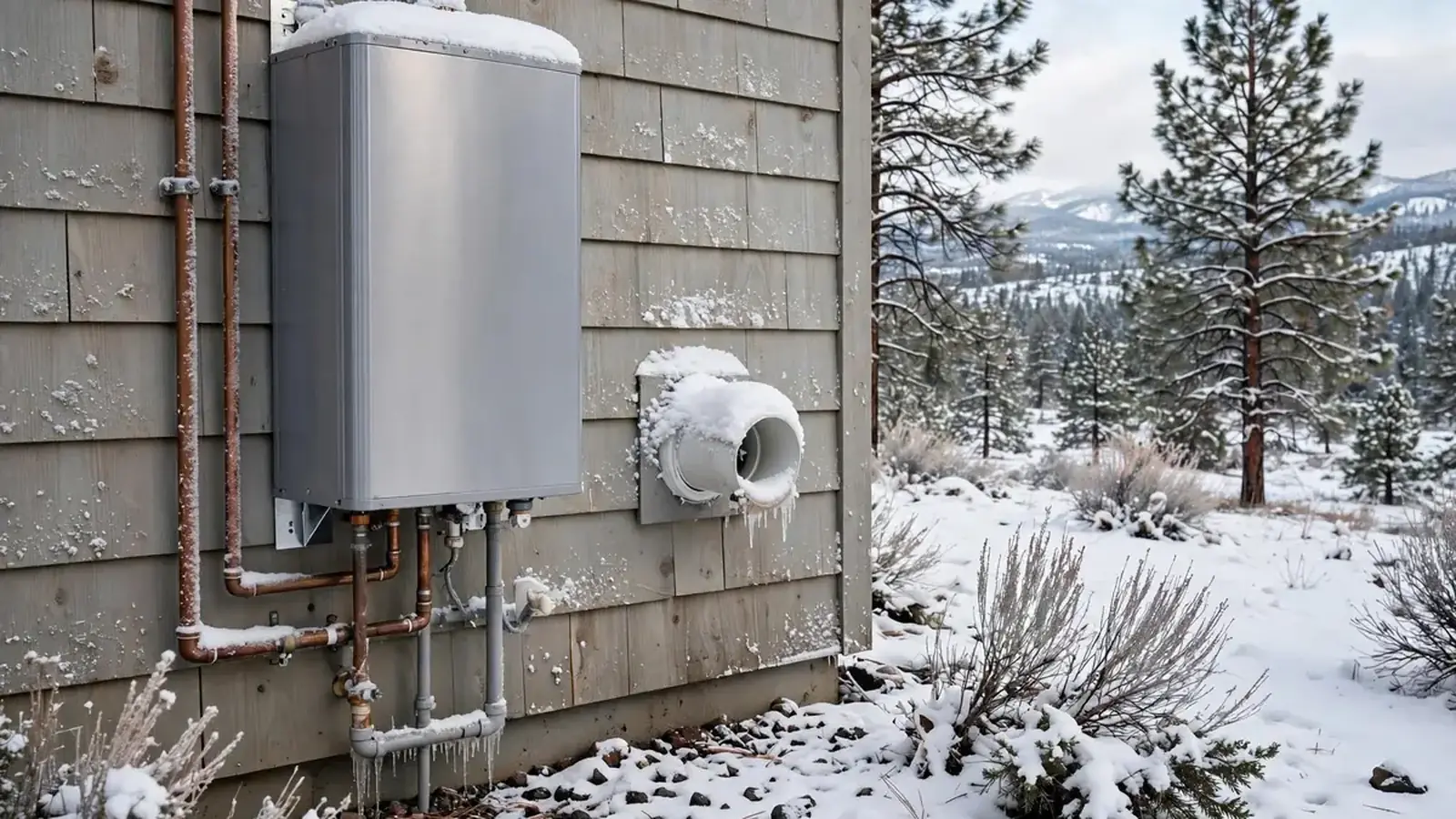
The honest answer about freezing
Tankless units hold only a small amount of water, but that water sits in a heat exchanger, valves and thin pipes that ice can split. Most models include freeze protection, usually small heaters or a routine that cycles the burner. That protection depends on power, and sometimes on gas flow.
A unit in a heated room with a sealed vent is rarely at risk. One in an unheated space, or one that loses power during a storm, can freeze. Our tankless water heater work includes checking where the unit sits and how it is protected.
What the climate numbers say
Local note
Local note: Atlantic City cold
NOAA climate normals for Atlantic City International Airport show a record low of -11 F, and seasonal snowfall from November through April typically runs 12 to 18 in.
What that means for you: the record low shows that deep cold is possible here, even if most winters are milder. If your unit is in a garage, outdoor closet or crawl space, plan for the cold extreme rather than the average winter.
Snow adds another issue. Heavy snow can bury outdoor vent terminations or drift over wall-mounted units, blocking exhaust and intake air. Clear snow from vents and outdoor units after every storm.
Where a tankless unit is most exposed
Look at your own setup honestly. If you can feel a draft where the pipes enter the wall, or the room gets as cold as the outdoors on a winter night, treat that as a warning sign. Moving the unit is a larger job, but sealing the gaps and insulating the lines is cheap and works well.
| Location | Risk | Why |
|---|---|---|
| Heated utility room | Low | Room stays above freezing |
| Interior closet, shared wall | Low to moderate | Heat loss if the wall is exterior |
| Attached garage | Moderate | Unheated unless built to be conditioned |
| Crawl space or basement corner | Moderate to high | Cold air and drafts reach exposed pipes |
| Outdoor wall-mounted unit | High | Relies on built-in freeze protection and power |
| Seasonal or vacant home | High | No heat and no one to notice a problem |
Pipes feeding the unit freeze first, in many cases. The heater itself may be fine while the supply line behind it bursts. Insulating the lines and sealing air leaks around them matters as much as the unit.
Why a power outage matters
Most freeze protection runs on electricity. If a storm knocks out power, the small heaters and recirculation features stop. Even gas units need power for the fan, igniter and controls. A short outage is usually fine. A multi-day outage in a deep freeze is when units fail.
Atlantic City Electric supplies power here. Know your plan before a storm: shut off the water to the heater and drain it if the building will go unheated for a long time.
Think about the longest outage you would tolerate. If the house loses power for a full day in a deep freeze, the room around the unit cools steadily, and the built-in protection that depends on electricity stops. Draining the unit before you leave on a winter trip, or before a storm that threatens extended outages, takes only a few minutes.
A small generator or battery backup can keep a unit's controls alive, but have it installed by a licensed professional. Running a generator indoors or in a garage creates a carbon monoxide hazard, so keep it well outside.
Steps that reduce the risk
- Keep the unit powered and the gas supply on during cold weather. Do not unplug it to save energy.
- Insulate hot and cold lines near the unit, and seal gaps in the wall or floor that let cold air in.
- Clear snow and ice from vent terminations and outdoor units after each storm.
- Leave a faucet dripping slightly during a hard freeze if the supply line runs through an exposed area.
- Before a long absence in winter, shut off the supply and drain the unit and lines.
- Call a plumber if the unit shows a fault code, no hot water or a leak after a cold night.
Unit down after a freeze or planning for winter? Call and we will review your setup.
Call (609) 547-1417What to check if you think it froze
- No hot water and a cold exterior wall near the unit, which suggests frozen supply lines.
- A display fault code, which you can look up in the manual or read to the technician.
- Wet insulation, drips or ice on the unit or nearby pipes.
- Water pressure at the faucets, and whether cold water works normally.
- Any popping or hissing sounds that might point to a split pipe.
If you see water or ice, close the supply valve to the heater. Do not use a torch or open flame to thaw pipes. If the pipe has split, our burst pipe repair team can stop the leak and repair the line.
Thawing is slow work for a reason. Warming a frozen pipe quickly can let split sections leak the moment the ice melts. Open a nearby faucet so melting water has somewhere to go, and keep the supply to the unit closed until a plumber has checked for cracks.
Frozen tankless versus a frozen tank heater
A tank heater holds dozens of gallons, so it resists freezing, but its pipes and valves still can. A tankless unit has little stored water, which means ice can form quickly in exposed parts. Neither design is immune. What matters is where it sits and how well it is protected.
Tankless units also have vent and condensate lines. Condensing models drain acidic condensate through a small tube, and a frozen tube can shut the unit down. That is a common winter call and an easy one to miss.
Homeowners in Ventnor City and Absecon have the same exposure if their units sit in unheated spaces. We are licensed and insured and offer same-day appointments when available. Ask your local construction office about permit needs if you plan to move a unit to a warmer spot.
Quick answers
Usually yes. Built-in freeze protection runs on power, and many gas units also need power for fans and controls. During an outage in a deep freeze, protection may stop working.
It can be done, but unheated garages carry freeze risk. A conditioned space is better. Ask your local construction office what rules apply and have a plumber check venting and clearances.
Shut off the water supply to the unit, let it thaw naturally, and call a plumber before restarting. Do not use open flame. A frozen unit may have a cracked heat exchanger or valve.
If the building will be unheated or empty for a long time, yes. Draining the unit and its lines prevents ice damage. For an occupied home with power, keep it running and protected.
No, it is the record. NOAA normals list -11 F as the record low at the airport, and seasonal snowfall typically runs 12 to 18 in. Plan for extremes if your unit sits in an exposed space.
Many are rated for outdoor use and include freeze protection, but they depend on power and clear vents. Check the manual's temperature rating. Our water heater repair team can look at a unit that misbehaves in cold weather.