
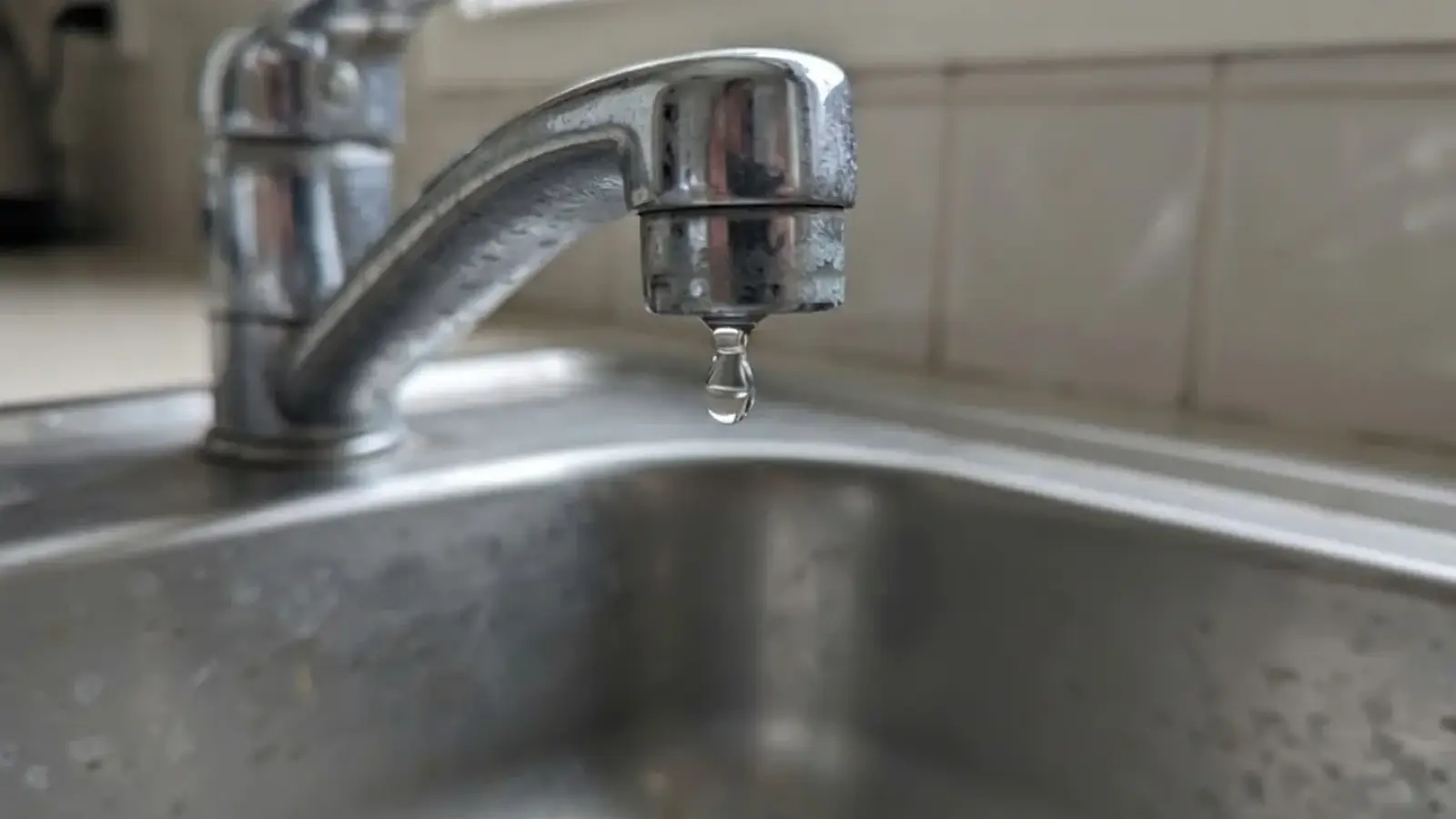
Find out where the water is coming from
Dry the faucet and sink, wrap a paper towel around the base and spout, and run the water for a minute. The spot where the towel gets wet first tells you which part to fix. A drip from the spout is a different problem than a puddle at the base or water under the sink.
| Where the water shows up | Usual cause | Fix level |
|---|---|---|
| Drip from the spout when off | Worn cartridge, ball seat or disc seal | Moderate, a parts swap |
| Water at the base of the spout | Worn O-rings on the swivel | Easy to moderate |
| Leak around the handle | Loose handle packing or a worn stem seal | Easy to moderate |
| Weak flow plus a drip | Mineral buildup in the aerator or cartridge | Easy, a cleaning |
| Water under the sink | Supply line, nut or shutoff valve | Moderate, may need a plumber |
| Water pooling around the sink deck | Mounting nut or a cracked body | Call a plumber |
Cartridge, ball, disc or compression
The name tells you how water is controlled inside the faucet, and each type wears out in its own way. Look at the handle and the way it moves before you buy parts, because the wrong replacement will not fit.
The four common kitchen faucet types
Cartridge
One lever or two handles, smooth action. A plastic or brass cartridge controls flow and temperature, and it is replaced as a unit.
Ball
A single handle on a rounded cap. A slotted ball with rubber seats and springs sits inside, and drips usually mean worn seats.
Ceramic disc
A single handle with a wide cylinder under it. Two polished discs slide together, and leaks usually come from seals or grit between them.
Compression
Two handles that you turn several times. A rubber washer presses on a seat, and a drip means a hardened washer or a pitted seat.
Take a photo of the faucet and note the brand name if it is stamped on the body. The brand and model usually decide which repair kit you need, and a hardware store can match the kit if you bring the old part.
Shut it off before you touch anything
Look under the sink for two small valves on the supply lines. Turn each clockwise until it stops, then open the faucet to bleed off pressure. If a valve will not turn or drips when turned, stop. Forcing a corroded shutoff can snap it and flood the cabinet.
When that happens, close the main water valve for the building and call us. A seized shutoff is the most common reason a simple drip turns into a same-day job, and our faucet repair page lists how we handle it.
A typical cartridge or disc repair
- 1
Plug the drain
A rag or stopper in the drain keeps small screws and clips from vanishing.
- 2
Remove the handle
A decorative cap hides a screw. Pry the cap off gently, remove the screw and lift the handle.
- 3
Release the cartridge
Unscrew the retaining nut or clip, then pull the cartridge straight up. Photograph how it sits before you remove it.
- 4
Match the part
Bring the old cartridge or seals to the store, or look up the model, and buy an exact match.
- 5
Rebuild and test
Seat the new part the same way as the old, reassemble, open the shutoffs slowly and check for drips.
If the faucet or its shutoffs fight back, call us before the cabinet floods.
Call (609) 547-1417Local note
What ACMUA's report says about your tap
The Atlantic City Municipal Utilities Authority's report found 0 of 30 sampled sites above the lead and copper action levels in 2023, and it lists chlorine as the disinfectant. Those samples were from specific tap sites, so they do not say what comes out of your own fixture.
The report does not list hardness. Test your tap, and if the aerator clogs with white crust or the cartridge feels gritty, mineral buildup may be to blame. Ask ACMUA at (609) 345-3315 how to test, and tell your plumber what you find.
Safety and what to check before repair
- Turn the supply valves off before opening the faucet body, and keep a towel handy.
- Never use pliers directly on a chrome finish without a cloth, since you will mark it.
- Do not mix cleaning products when descaling parts. Soak in white vinegar alone, and rinse well.
- If the faucet is wired to a filter or a hot-water dispenser, shut those off too.
- If water has reached an outlet in or near the sink cabinet, switch off that breaker before reaching in.
- Keep old parts in a bag until the repair is tested.
When repair is not worth it, and when to call
A faucet with a corroded body, a cracked spout or a mounting that has gone loose is past a parts swap. If the model is old enough that seals are hard to find, a new faucet is usually less frustrating than hunting down obsolete parts.
We can swap a faucet or replace the shutoffs at the same visit, with a clear price before work starts. Larger changes, such as moving a sink or adding a pot filler, fall under plumbing installation. We are licensed and insured, and you can verify any plumber through New Jersey's Division of Consumer Affairs.
Call a plumber sooner if water is reaching the cabinet floor, the flow is low across the whole home or the leak continues after you have replaced the obvious parts. Residents of Absecon and Galloway Township call us the same way when the first repair does not hold.
Quick answers
A drip from the spout when the handle is off usually means a worn cartridge, ball seat, disc seal or compression washer. Identify the type, shut off the supply and replace the worn part. A faucet that has dripped for a while may also have a damaged seat.
Look at the handle. A single lever on a rounded cap is usually a ball, a wide cylinder under a single lever is often a ceramic disc, two handles that spin several times are compression, and smooth single or double handles are often cartridge. Photograph the parts when you open it.
Stop and do not force them. Close the main water valve for the building and call a plumber. A stuck valve can break or leak once it is moved, and replacing it is a short job at the same visit.
Possibly through mineral buildup, though ACMUA's report does not list hardness, so we do not assume it. Test your tap, check the aerator for crust and ask ACMUA at (609) 345-3315 if you are unsure.
Repair is a good choice when parts are available and the body is sound. Replace when the body is corroded, the finish is failing or the model is old enough that seals are hard to find. A plumber can tell you on site.
Yes. Our line at (609) 547-1417 is open 24/7 for leaks that will not stop, and we offer same-day appointments when available. Shut off the supply valves first, and the main valve if they will not close.