
Pick the job that looks like yours
Installation jobs vary in size, from swapping a fixture to adding a bathroom where none existed. The table below groups the common ones by what changes in the walls and what you need to decide before the visit.
| Job | What changes | Decide first |
|---|---|---|
| Swap a sink, toilet or tub | Fixture only, same supply and drain | Style, size and finish |
| Move a fixture | New supply, drain and vent runs | Where the walls and floor can be opened |
| Kitchen or bath remodel | Rough-in behind new cabinets and walls | Layout and fixture list, before the drywall |
| Add a bathroom | New branch lines, vent and drain connection | Where the drain can tie in |
| Water treatment | Filter or softener on the main | Test results for your tap |
| Gas appliance hookup | Shutoff, flex line, regulator check | Appliance type and existing gas supply |
Rough-in and finish: the two visits behind most projects
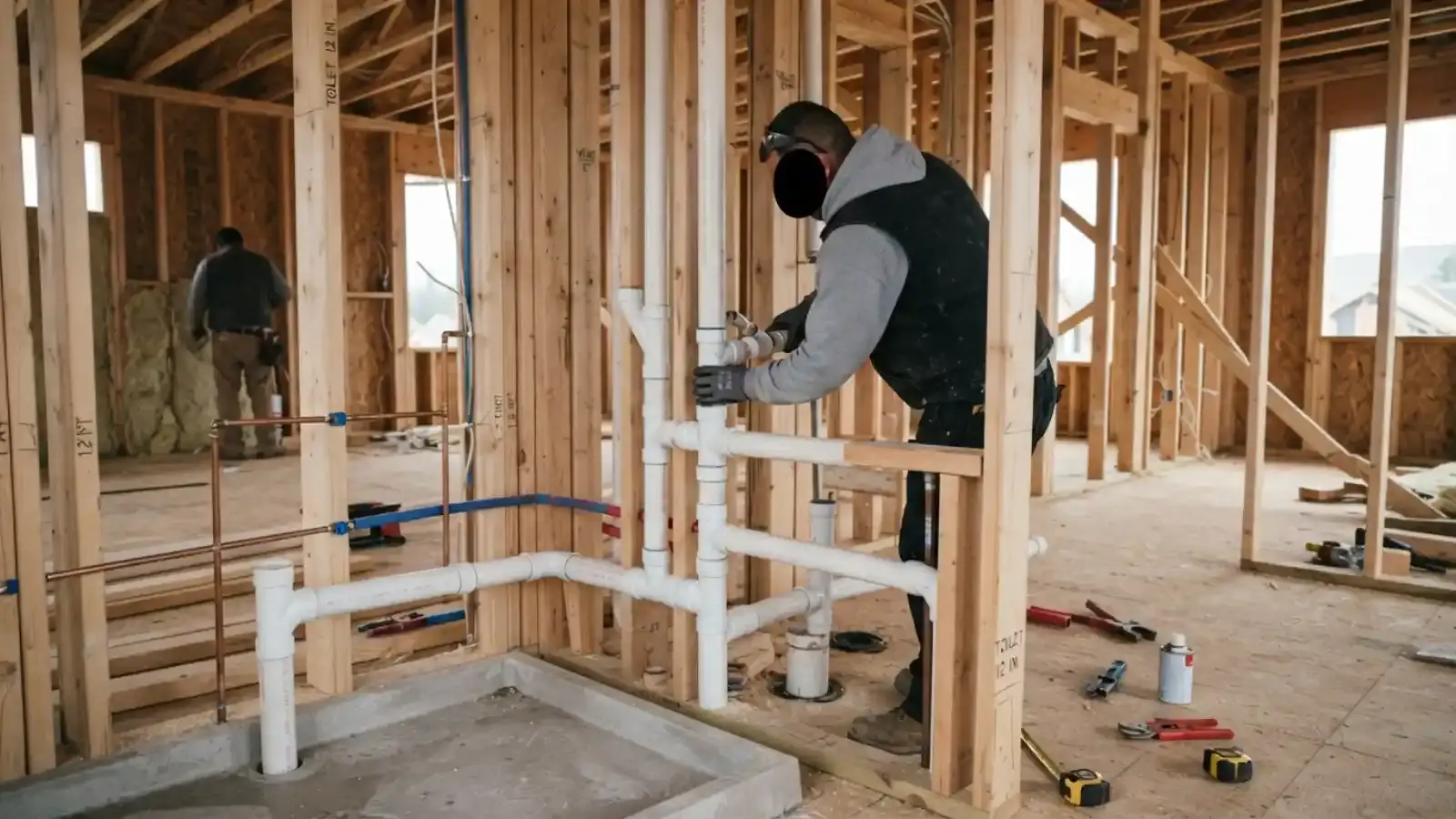
Rough-in happens while the walls are open. We set drains, vents and supply lines at the right heights for the fixtures you picked, and we test the lines before they are covered. Finish comes later, when the fixtures, faucets and trim go on and every connection is tested again.
Giving us the fixture model numbers early prevents the most common delay, a drain or supply set a few inches off. If a remodeler is running the job, we coordinate with them on timing and leave the walls open until the inspection step your local rules require.
How an installation project moves
- 1
Walk the space
We look at where the lines run now, where the fixtures will go and what stands in the way.
- 2
Price and plan
You get the price and the scope in plain words before any work starts, along with what needs your decision.
- 3
Rough in
We set and test the new lines while the walls are open, and mark what we placed.
- 4
Wait for sign-off
Permit and inspection rules vary by job, so you ask the local construction office what applies.
- 5
Finish and test
We set the fixtures, open the valves and check every joint under pressure before we leave.
Planning a remodel or a new fixture? Call and we will walk through the plan with you.
Call (609) 547-1417Permits and the construction office
New Jersey's Uniform Construction Code governs plumbing work, and the local construction official enforces it. Which jobs need a permit depends on the work and the town, so ask the construction office before you start. We do not guess at exemptions.
You can also check any plumber's license through the New Jersey State Board of Examiners of Master Plumbers. That is a sensible step for any installation, ours included. Before anyone digs outside for a new line, call 811 so the buried utilities are marked.
Water treatment: test your tap first
A softener or filter is planned work, and it is worth buying only against a problem you have confirmed. We do not assume a hardness level. The Atlantic City Municipal Utilities Authority water quality report does not list hardness, so use a home test kit or a lab test on your own tap.
If you are served by another utility, such as NJ American Water in Pleasantville, ask them what they report. Once you have results, we size a filter or softener to your plumbing, add a bypass and a drain connection, and explain the upkeep. Whole-home filtration and a point-of-use filter at the kitchen sink are different jobs, and we help you pick between them.
Gas-appliance hookups: safety before the wrench
Worth knowing
If you smell gas
Leave the building on foot, take everyone out, and avoid switches and phones near the leak. Call South Jersey Gas at 1-800-582-7060 or 911 from outside, before you call a plumber.
We connect appliances to an existing gas supply with the right shutoff and connector, and we test the joints. We do not promise a utility response time, and we will not hook up an appliance we think is unsafe.
New gas lines and meter work may involve the utility and the construction office, so ask before the appliance is delivered. A range, dryer or boiler swap is easier when the shutoff is already in place. Replacing a tank or tankless heater is covered under water heater installation.
Adding a bathroom or moving a fixture
The drain decides what is possible. Waste lines need a slope, a vent and a place to join the existing system. An addition in a basement or low room may need a sewage ejector pump, which we handle, and a below-grade bath adds planning time.
Before you commit, we look at the likely drain tie-in, the vent path and the water supply capacity. If the old supply pipes are corroded or too small for added fixtures, a repiping plan may belong in the budget. For a first look, expect a plain answer about what is easy and what is costly.
Shutoffs, backflow devices and the small parts that matter
- Install a shutoff at every new fixture so the next repair does not mean closing the whole house.
- Know where your main shutoff is and whether it turns easily, since a stuck valve is a bad surprise.
- Ask your water utility whether any backflow device is required for your property, such as on a lawn irrigation line.
- Add a pressure-relief or expansion tank where the setup calls for one.
- Label the valves you add so the next person can find them.
If you already have a fixture that drips or runs, the fix is a repair, not an installation. Our faucet repair and toilet repair pages cover those, and urgent failures such as a leaking fixture are handled there at any hour. We also serve Pleasantville and nearby towns.
What affects the cost of plumbing installation
Number and type of fixtures
A kitchen with several fixtures costs more than one toilet swap, and premium fixtures add install time.
Access to walls and floors
Open walls during a remodel are easier than cutting into finished surfaces.
Pipe material and size
Copper, PEX and plastic drains differ in cost, and a larger line needs more material.
Length of new runs
A fixture moved a few feet costs less than one moved across the house.
Permits and inspections
Local fees and inspection scheduling affect the project timeline. Ask the construction office.
Homeowners policies generally do not pay for upgrades or new installations, and they cover only sudden and accidental damage. If a leak comes from new work, tell your insurer early. Ask your insurer what applies.
Call for a clear price before work starts. (609) 547-1417.
Questions about plumbing installation in Atlantic City
Often yes, and we look at the fixture before we start. Send the make and model, since a wrong drain size or missing part causes most delays. We cannot stand behind a fixture's own defects, and we tell you early if it does not suit your plumbing.
It depends on the job and the town. Rules vary, so ask your local construction office before work starts. New Jersey's Uniform Construction Code applies to plumbing work, and the local construction official enforces it. We do not guess at what needs a permit.
Test your tap first. The Atlantic City Municipal Utilities Authority report does not list hardness, so use a home test kit or lab test, or ask your utility. Scale on fixtures is a clue, not a measurement. Once you have numbers, we can plan the right unit.
Yes. We coordinate rough-in timing and fixture details with them, and we keep the walls open for the inspection step your local rules require. Give them our number and the fixture list, and we work out the schedule from there.
Sometimes. Atlantic City sits at about 7 feet in elevation, and low rooms may need a sewage ejector pump, which our sump pump repair team services. We look at the drain path first, and we make no claim about how any given house is built.
We stop, show you what we found, and quote the added work before continuing. A corroded line or a failed shutoff is better handled while the wall is open. You decide what is added, and the price is clear before we proceed.