
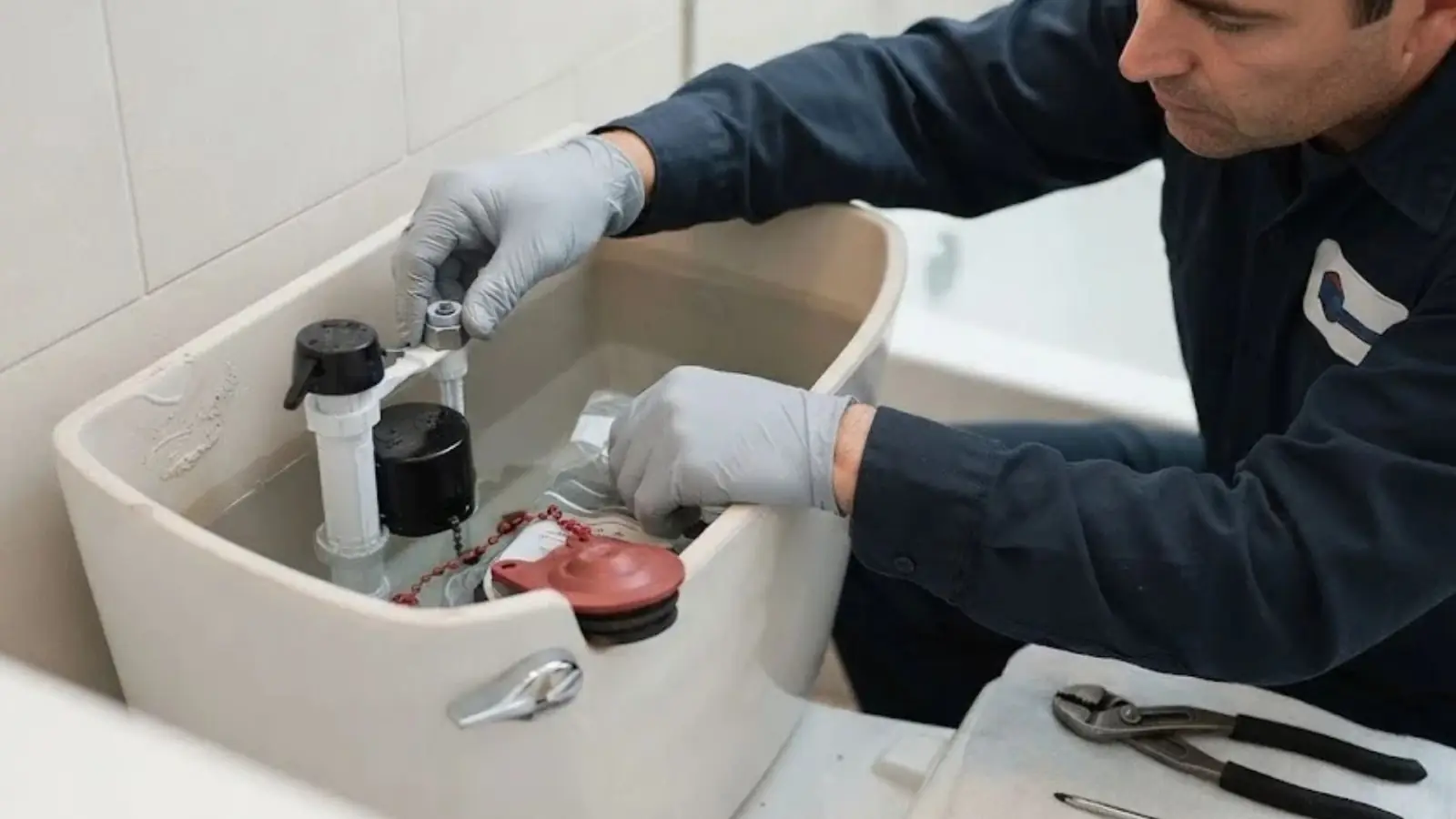
Overflow right now: what to do first
Do not flush again. Reach behind the toilet, find the small shutoff valve on the wall or floor and turn it clockwise until it stops. If it will not turn, lift the tank lid and raise the float or flapper chain so the tank stops refilling. Then put towels around the base and keep children and pets out of the room.
If water is coming from the floor drain, other fixtures or the tub when you flush, stop using every drain in the home. That pattern points past the toilet to the line behind it, which our sewer line cleaning service handles. Once the water is stopped, we can plan a same-day appointment when available or take a late-night call if the bathroom is still flooding.
Toilet flooding or leaking through the ceiling below? Shut off the valve and call us any hour.
Call (609) 547-1417Match the symptom to the likely fix
| Symptom | Likely cause | Typical repair |
|---|---|---|
| Water around the base | Failed wax ring, loose bolts or cracked flange | Reset the toilet with a new seal |
| Runs on and off by itself | Worn flapper or fill valve | Replace the flapper or fill valve |
| Weak or slow flush | Clogged rim jets, low water level | Clean jets and adjust the level |
| Rocks when you sit | Loose bolts or uneven floor | Tighten, shim or reset |
| Sweating tank | Cold water meeting warm humid air | Adjust ventilation or add a mixing valve |
| Crack in bowl or tank | Impact, age or temperature stress | Replace the part or the toilet |
Many of these are small parts costing little, which is why a diagnosis before a replacement quote matters. We only recommend a new toilet when the old one cannot be made reliable.
Leaks at the base
A toilet sits on a wax ring that seals it to the drain flange. When the ring fails, or the flange under it is cracked or sits too low, water seeps out on every flush. The floor around the toilet turns soft, and the stain may reach the ceiling below. This is a common cause of hidden damage in condo and apartment buildings.
The fix is to pull the toilet, inspect the flange, replace the wax ring or repair the flange, and set the toilet back level. If the subfloor has rotted, that needs to be addressed first. A small drip you cannot trace may need leak detection to confirm the toilet is the source.
Running tanks and phantom flushes
A toilet that refills by itself every few minutes is leaking water from the tank into the bowl. Put a few drops of food coloring in the tank and wait fifteen minutes without flushing. If color shows in the bowl, the flapper is not sealing. A hissing sound with no flush means the fill valve is not shutting off.
Left alone, a running toilet can waste many gallons a day and push up your water bill. For rental properties with frequent turnover, we can check the flapper and fill valve at the same time as other fixtures. A dripping sink next door may need our faucet repair work in the same visit.
Clogs, and when the problem is deeper
A single clog is usually fixed with a plunger or a closet auger. If the toilet clogs repeatedly, gurgles when other fixtures run or backs up the tub, the blockage may sit in the main line. Plain drain problems fit our drain cleaning work, and main line problems are a sewer job.
Do not pour chemical cleaners into a stopped-up toilet. They sit in the bowl, can splash onto skin and make later work on the line less safe for the person doing it.
Cracked bowl or tank: repair or replace
A hairline crack in a tank can sometimes be managed for a short time, but a cracked bowl or a tank that leaks needs replacement. When we install a new toilet, we check the rough-in distance from the wall to the drain, the flange height and the condition of the floor first. Measuring beforehand avoids buying a toilet that does not fit.
| Situation | Lean toward |
|---|---|
| Flapper, fill valve or wax ring failure | Repair |
| Cracked tank or bowl | Replace |
| Constant leaks despite new parts | Replace |
| Toilet uses much more water than newer models | Consider replacing |
| Broken flange on a tile floor | Repair the flange, then reset |
If you are adding a bathroom or moving a toilet, the work moves from repair to plumbing installation. Permit rules vary by job, so ask your local construction office.
Short-term rentals and busy bathrooms
Toilets in vacation rentals and shared buildings take more abuse than a single-family bath. In a property serving residents in nearby places like Ventnor City, a running toilet between guests can go unnoticed until the bill arrives. We can look at every toilet on a visit and note which ones are close to failing.
How a toilet visit works
- 1
Stop the water
We close the supply valve and check that it holds.
- 2
Find the cause
Tank test, base inspection and flange check show where the problem sits.
- 3
Tell you the options
Repair or replace, with a clear price before work starts.
- 4
Do the work
Parts swapped or the toilet reset and sealed.
- 5
Test
We flush several times and check the base for any weeping.
What affects the cost of toilet repair
Part or whole toilet
A flapper is a different job from resetting or replacing the toilet.
Floor condition
A soft or rotted subfloor adds work.
Flange and drain
A damaged flange needs a repair kit or a new one.
Fixture choice
Standard and tall bowls, and single or dual flush, vary in cost.
After-hours calls
The hour of an overflow call can affect the figure, so ask before work starts.
Homeowners policies usually cover sudden and accidental water damage, such as an overflow that ruins a floor, but not wear or maintenance. Ask your insurer before repairs.
We give you a clear price before work starts. Call (609) 547-1417.
Questions about toilet repair in Atlantic City
Yes. Our emergency line is open 24/7. Turn off the shutoff valve behind the toilet and call (609) 547-1417. If the valve is stuck, tell us and we will talk you through other ways to slow the water until we can look.
Most often the flapper no longer seals, or the fill valve is not shutting off. Add food coloring to the tank and wait. Color in the bowl means a leaking flapper. A constant hiss usually means the fill valve. Both are quick, inexpensive repairs.
Water on the floor around the base, a toilet that rocks, a musty smell or a stain on the ceiling below are common signs. Water from the tank or supply line can look similar, so a plumber checks all three before pulling the toilet.
Try a flange plunger once or twice. If the water drains, you are done. If it comes back, or other fixtures gurgle, the line is blocked further down. Stop using drains and call so the clog does not push back into your home.
Yes. If several fixtures back up, you hear gurgling, or sewage appears in a floor drain, the main line may be blocked. Our sewer line cleaning team can check it. Do not keep flushing.
We do. We measure the rough-in, check the flange and floor, and install a toilet that fits. If you are buying your own, tell us the model so we can check it matches before the visit.