
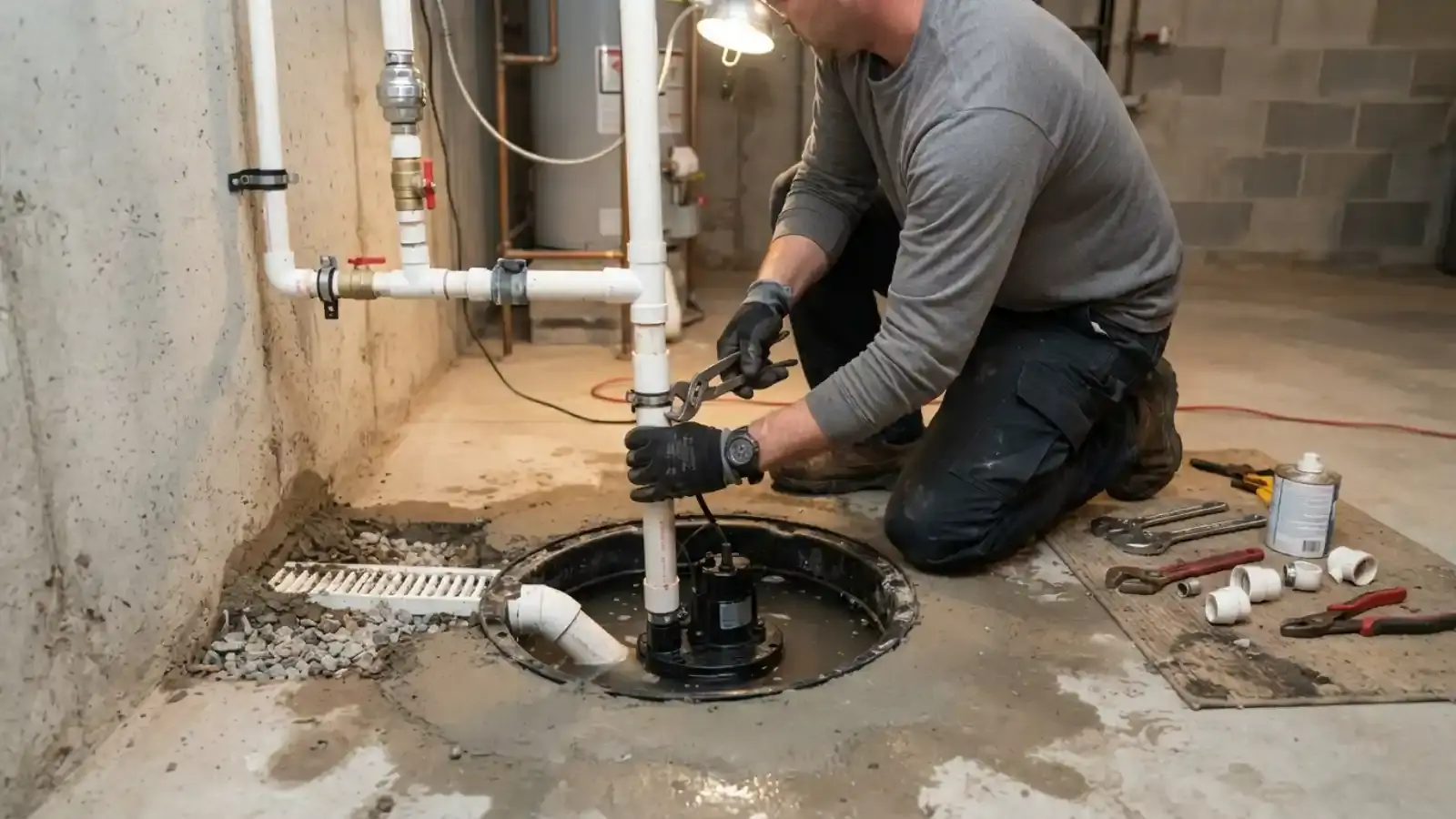
Pit overflowing right now: what to do first
Electricity and water do not mix, so safety comes before saving the pump. If water covers the floor and reaches outlets, appliances or the panel, do not wade in. Shut off power from a dry spot, or leave it and call your electric utility if you cannot reach the breaker dry.
- Move valuables and stored boxes up off the floor if you can do it from dry footing.
- Check whether the pump's plug is still dry and whether the cord is submerged.
- Look at the discharge pipe outside for ice, a crushed section or a blocked end.
- Do not run the washer, dishwasher or tubs, since that water often ends up in the same pit.
- If the water smells like sewage, treat it as contaminated and keep children and pets away.
Call with what you see and we plan the visit, with same-day appointments when available. Storm nights are when pumps fail, so after-hours calls reach the same dispatch.
Why this city's water table and tides matter for a pump
Atlantic City sits at about 7 feet in elevation, and Absecon, just inland, is near 3 feet. The National Weather Service Mount Holly Atlantic City tide gauge calls 6.0 feet minor tidal flooding, 7.0 feet moderate with widespread road flooding, and 8.0 feet major. Sandy peaked at 8.8 feet on October 29, 2012.
For you, that means a pit can fill from the ground and from storm drains, not only from roof water. Rutgers researchers project 17 to 75 days a year of high-tide flooding by 2030, against less than once a year in 1950. A pump that runs more often wears out faster, so plan a check of yours before the busy tide months, not after.
| Pump type | Where it works | Common failure | Sign |
|---|---|---|---|
| Submersible sump | Pit in a basement or crawlspace | Stuck float, burnt motor | Pit full, no sound |
| Pedestal sump | Pit with motor above | Worn bearings, jammed float | Loud grinding or short cycling |
| Sewage ejector | Below-grade bathroom or laundry | Clogged impeller, failed check valve | Gurgling, slow drains, odor |
| Battery backup | Second pump in the same pit | Dead battery, loose connection | Alarm chirping, no run in outage |
Basement and crawlspace water: sorting out the source
Not every wet floor means a bad pump. Water in a basement or crawlspace can come from a pit that is too small, a high water table, a drain line, a cracked foundation joint, or a leaking pipe overhead. The cause decides the fix, so we look before we sell anything.
We do not offer basement waterproofing as a separate service, and we make no claims about how many local homes have basements. We do pumps, pits, check valves, discharge lines and the plumbing that feeds them. If water traces back to a supply line, our leak detection work finds it, and a failing waste line may need sewer line cleaning first.
- Water only after rain or high tide points to groundwater or drainage outside.
- Water with no weather link points to a leak or a broken drain line.
- Damp air and musty smell in a crawlspace point to chronic moisture, not a single event.
- Water coming up from a floor drain points to a sewer backup, not the pump.
Water in the pit and the forecast getting worse? Call the line and we will plan the next step with you.
Call (609) 547-1417Float switch, check valve and the other small parts
Most failed pumps have a small cause. A float that rides up against the pit wall will not trigger the motor. A check valve that has failed lets the discharge pipe drain back into the pit, so the pump cycles over and over with no net gain.
We test the float by hand, listen to the motor, pour water in to run a cycle, and check the discharge for flow. If the motor is burnt out, we replace the pump, and we tell you when a new float or valve is enough. A cheap part does not justify a new unit.
Ejector pumps and below-grade bathrooms
A sewage ejector lifts waste from a bathroom or laundry that sits below the sewer line. When it fails, fixtures gurgle and drain slowly, and waste can rise in a floor drain. Stop using the plumbing in that area and call.
These pumps need a sealed lid, a vent and a working check valve. A new unit or relocated fixtures may fall under plumbing installation, and permit rules vary by job, so ask your local construction office.
Power cuts, battery backup and storm prep
The storms that fill the pit are the same storms that cut the power. A battery backup pump sits in the same pit as the main pump and runs when the main one stops. It needs a charged battery, a tested alarm and its own discharge path or a tee into the main line.
A pre-storm pump check you can do yourself
- 1
Look at the pit
Remove debris and confirm the float moves freely and does not touch the sides.
- 2
Run a test cycle
Pour a bucket of water into the pit and watch the pump start, empty and shut off.
- 3
Check the discharge
Walk outside and confirm water leaves the pipe and the end is not buried or blocked.
- 4
Test the backup
Press the alarm test and check the battery date on the label.
- 5
Call if it hesitates
A pump that sticks, hums or runs dry needs service before the storm, not during it.
If the home also has aging supply lines near the pit, a repiping review can be worth a conversation. We also serve Absecon, where the ground sits lower, and other nearby towns.
What affects the cost of sump pump repair
Part or whole pump
A float or check valve costs less than a new pump with the same set-up work.
Pump type and horsepower
Ejector and heavy-duty units cost more than a basic submersible sump.
Pit and discharge condition
A cracked pit, buried discharge or frozen line adds time and parts.
Battery backup
Adding a backup system adds a second pump, a battery and an alarm.
After-hours work
Ask whether a storm-night call changes the figure, and get the answer before any work starts.
Homeowners policies often exclude water that comes up through the floor or from groundwater, and may cover sudden pump failure only with a specific endorsement. Ask your insurer before the next storm, not after it.
We give a clear price before work starts. Call (609) 547-1417.
Questions about sump pump repair in Atlantic City
Yes. The dispatch line runs 24/7 and same-day appointments are offered when available. Keep clear of standing water near power, note what you see at the pit, and call (609) 547-1417 so we can plan the visit around the tide and the forecast.
Usually the discharge line is blocked or frozen, or the check valve has failed and water is falling back. A pump with a worn impeller also runs without moving much water. Go outside and look at the discharge end before you call.
There is no reliable number, since it depends on how often the pit fills and how clean the water is. Pumps in places that flood often run more and wear sooner. Test yours before storm season and replace one that sticks or hums.
No. We repair and replace pumps, pits, check valves, discharge lines and the plumbing around them. If your water comes from a foundation crack or a high water table, we say so and keep our advice to the plumbing side.
Yes, in most pits with enough room. A backup unit needs space beside the main pump, its own battery and an alarm. We explain the layout and the cost before work starts, and permit rules vary, so check with your local construction office.
Rutgers researchers project 17 to 75 days a year of high-tide flooding by 2030. For a pump owner, that means more cycles per year and a case for a backup. Ask your utility or the city about drainage in your area. We handle the pump side.