
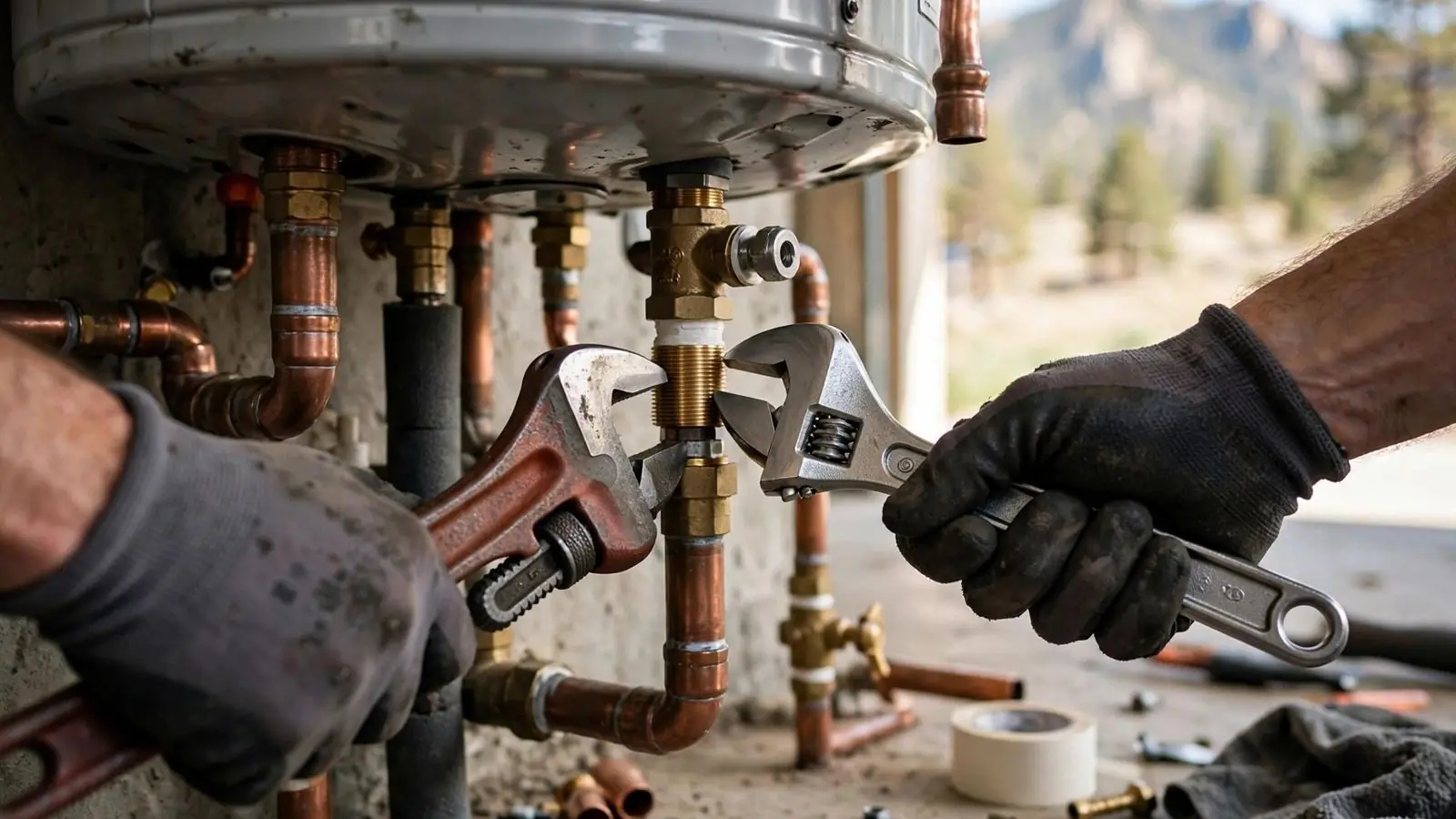
Three valves, three very different jobs
People say water heater valve and mean one of three parts. The temperature and pressure relief valve, called the TPR valve, opens to prevent the tank from over-pressurizing. The shutoff valve on the cold inlet stops water feeding the tank. The drain valve at the bottom lets you flush sediment.
Each one carries a different price tag because the labor and risk are different. A drain valve swap is mostly a draining job. A shutoff valve may require closing the building supply. A TPR valve involves a discharge pipe and safety checks. Our water heater repair visits cover all three.
The valves also differ in how forgiving they are. A drain valve that sticks can wait a few days. A TPR valve that has been discharging should not wait, because it is the part that protects the tank and everyone near it.
| Valve | What it does | Main cost drivers |
|---|---|---|
| TPR valve | Releases pressure or heat to prevent tank failure | Discharge pipe condition, tank draining, valve rating |
| Cold inlet shutoff | Stops water to the heater | Valve type, soldered or threaded, main shutoff access |
| Drain valve | Lets you empty the tank | Draining time, sediment, plastic vs brass valve |
| Gas shutoff or control valve | Controls gas to the burner | Licensed gas work, relight, leak check |
| Expansion tank isolation | Protects against pressure rise | Tank condition and piping layout |
What moves the price up or down
Cost factors for a valve job
Which valve
A TPR replacement involves more checks than swapping a hose bib drain.
Tank draining
If the tank needs draining, the job takes longer, and heavy sediment can slow it more.
Connection type
Threaded fittings are quicker. Soldered copper requires heat and care, especially near other lines.
Access and surroundings
A heater in a tight closet, attic or crawl space adds labor.
Heater age and condition
Corroded fittings may break during removal, turning one valve into a larger repair.
Parts on hand
A common valve may be on the truck, while an unusual rating or a model-specific part may need ordering, which stretches the job.
We give a clear price before work starts, after we see the heater. Quoting blind is how surprises happen, since a stubborn valve can turn into a pipe repair.
Safety first: a dripping TPR valve
The TPR valve is a safety device. If it drips or hisses, the tank may be too hot or the pressure too high, or the valve itself may have failed. Do not cap it or plug it. A blocked relief valve on a tank under pressure is dangerous.
- Do not touch the valve or discharge pipe with bare hands, because the water can be scalding.
- Turn the heater's thermostat down, or switch off its power at the breaker for an electric unit.
- For a gas unit, turn the gas control to pilot or off and keep the area clear.
- Never plug, cap or tape the discharge opening.
- Call a plumber the same day. If you hear rumbling, see steam or smell gas, leave and call for help.
Local note
Local note: gas heaters and the leak hotline
Many water heaters here run on gas, and South Jersey Gas lists its leak hotline as 1-800-582-7060. For a gas smell, also dial 911, leave on foot and avoid switches and phones near the leak.
What that means for you: if a valve problem on a gas heater comes with a gas smell, leave the building and call the hotline or 911 before you call a plumber. We handle the repair after the utility says it is safe.
Valve leaking or stuck? Call (609) 547-1417 and tell us which valve you think it is.
Call (609) 547-1417When a valve repair becomes a heater replacement
A leak from a drain valve is often a simple fix. A TPR valve that discharges repeatedly can point to a bigger problem, such as thermal expansion or a failing tank. If the tank is rusted, leaks at the seams or is past its expected life, replacing the heater makes more sense than paying for valves on a tank that is failing.
Ask the technician to explain which one applies to your unit. If the answer is replacement, our water heater replacement page explains what that involves.
Things you can check before the visit
- Note whether the leak is at the valve itself or from the pipe leading down from it.
- Check the thermostat setting and whether it was recently raised.
- Look at the shutoff valve on the cold line and confirm that it turns.
- Place a pan or towel under the valve to see how fast it drips.
- Photograph the label on the heater so we can match parts.
A slow drip over days is different from a stream. Tell us which you see, since a stream means close the cold shutoff and call right away.
Write down when you first noticed the problem and whether it changed after a hot shower or heavy laundry day. Pressure spikes often show up when the heater has just finished a heating cycle, and that detail helps us tell a worn valve from a pressure issue elsewhere in the house.
Permits, codes and insurance
In New Jersey the local construction official enforces the Uniform Construction Code, and what needs a permit changes from job to job. Call the construction office with your address and the work you plan, for a valve swap or a full replacement. We do not guess at the answer for you.
A valve that wears out is upkeep, and policies normally leave upkeep out. A tank that bursts all at once is the kind of event a policy may address. Your insurer decides, so ask before you assume. We are licensed and insured, and the Division of Consumer Affairs lets you look up any plumber's license.
We serve Egg Harbor Township and Galloway Township as well as Atlantic City, with same-day appointments when available.
Quick answers
The price depends on the valve, whether the tank must be drained, the discharge pipe condition and access to the heater. We give a clear price before work starts, after seeing the unit.
It needs prompt attention. Reduce heat, never plug the valve, and call a plumber the same day. If the tank rumbles, steams or you smell gas, leave and call the gas utility or 911.
It is possible if you can drain the tank safely, but sediment and corroded threads make it harder than it looks. A stuck valve can break off and leave the tank draining. Call us if it will not close.
Repeated discharge can point to high water pressure, thermal expansion with no expansion tank, or a heater thermostat set too high. Replacing the valve alone will not fix those.
If the tank is sound and the valve is the only fault, a valve job is reasonable. Rust at the seams, leaks from the shell or an old tank point toward replacing the whole heater instead.
Leave the building on foot, then call South Jersey Gas at 1-800-582-7060 or 911. Do not use switches or phones inside. Once the utility clears it, call us. Our water heater installation team handles planned replacements.