
The short answer before the stages
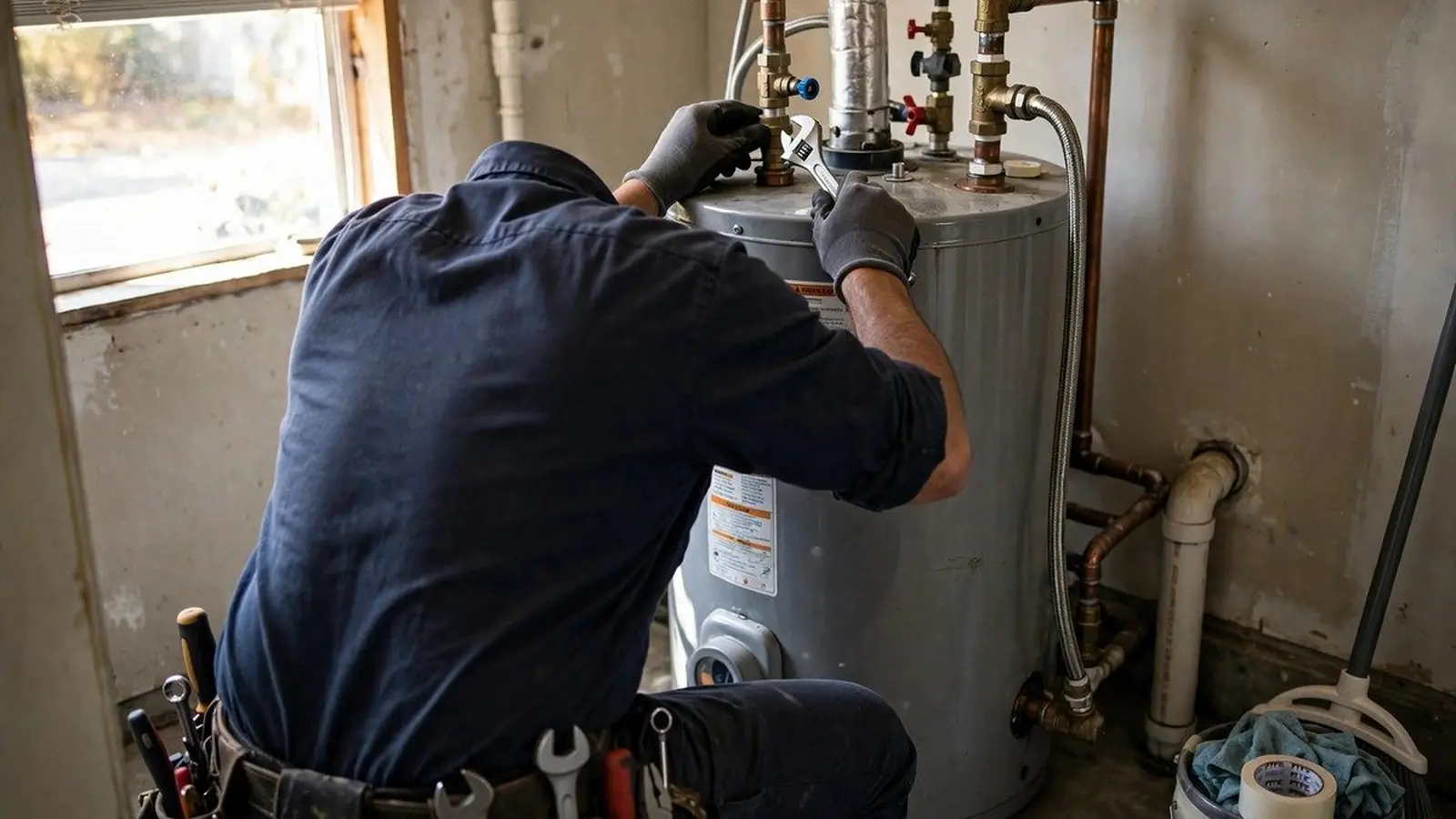
For a like-for-like tank swap with the old unit in an easy spot, plan on a half day to a full day with the water off for much of it. A tankless conversion, a move to a different room, or a switch between gas and electric can take a full day or spill into a second visit. Those are planning ranges, not promises, because the first look at your closet, basement or utility room settles most of it.
The clock that surprises people is the old tank itself. A 40 or 50 gallon tank drains at garden-hose speed, and a drain valve clogged with sediment slows it further. If you are choosing between a planned job and a rush, our water heater installation page explains how a scheduled swap is set up.
| Stage | What happens | Rough time on site |
|---|---|---|
| Prep and shutoff | Floors covered, gas or power off, cold supply closed, a hot tap opened | Under an hour |
| Draining | Hose run to a floor drain or outdoors while the tank empties | One to two hours |
| Disconnect and removal | Supply lines, vent, and gas or electric unhooked, old tank carried out | About an hour |
| Set and connect | New unit leveled, new connectors, relief valve and discharge pipe, expansion tank if needed | Two to three hours |
| Fill and purge | Tank filled, air bled at taps, every joint checked for weeping | About an hour |
| Light, test, walk-through | Burner or elements started, temperature and venting checked, shutoffs shown to you | Under an hour |
Add those rows and you get most of a working day, which is why we tell people to plan around a day without normal hot water. Heating a full tank from cold takes longer on top of that, so the shower is not ready the moment the crew packs up.
What stretches the day
Almost every long install comes down to something that was not visible from the doorway. These are the usual culprits, and most can be spotted before the work starts if you point them out on the first call.
- A cold-water shutoff valve that will not close, which forces the crew to find another way to isolate the tank or replace the valve first.
- Corroded nipples or galvanized fittings that snap when disturbed and need to be rebuilt in copper or flexible connectors.
- A vent pipe that no longer has the pitch or clearance current practice calls for, so the vent has to be re-run.
- A tight closet, a narrow stair or a low basement door that makes carrying a 100 pound tank a slow job.
- A unit in a different size or fuel type than the old one, which changes the gas line, the electrical circuit or the venting.
- A permit or inspection step. Rules vary by job, so ask your local construction office what applies before the day is set.
Tell us what the old heater looks like and where it sits, and we will plan the day with you.
Call (609) 547-1417Condos, apartments and rowhouses
Atlantic City has many condominiums, apartments and rowhouses alongside single-family homes, and shared buildings add steps a house does not have. The building may need to shut a riser for the whole stack, the manager may want notice, and a freight elevator or a parking spot may need to be reserved for the new tank.
If you rent, the landlord usually decides on the unit and schedules the work. If you own a unit, read your association rules first, since some limit what can be vented through a wall or where a tank can sit. Our crews working in Pleasantville and Egg Harbor Township run into the same building-access questions.
Local note
What ACMUA's water report does and does not tell you
The Atlantic City Municipal Utilities Authority's water quality report lists two surface-water reservoirs plus 13 wells, with chlorine as the disinfectant. It does not list hardness, so the report cannot tell you whether scale will build up in a new tank.
Test your tap with a hardness kit or ask ACMUA at (609) 345-3315. Mention the result on install day, because it decides whether the crew fits a drain valve and unions that make a later flush easier. A unit set up for easy flushing takes a few extra minutes now and saves a harder job later.
Install day, in the order you will see it
- 1
Walk-through
The plumber looks at the old tank, the vent, the gas or electric supply and the path out of the building, then confirms the plan with you.
- 2
Shutoff and drain
Gas or power goes off first, then the cold supply. Draining is slow, so this is when hot water is already gone.
- 3
Out with the old
The tank is disconnected and carried out. Any rotted fittings or failed valves show themselves here.
- 4
New unit in place
The new heater is set level, piped, vented and fitted with a relief valve and discharge line.
- 5
Fill, test, explain
The tank fills, air is bled, leaks are checked, and you are shown the shutoffs and the temperature setting.
When the old heater fails before you can plan
Sometimes the timeline is set by a tank that is already leaking. Close the cold-water supply valve above the heater, switch off the power at the breaker or turn the gas control to off, and keep people away from standing water near outlets. If you smell gas, leave the building and call South Jersey Gas at 1-800-582-7060 or 911 before anyone calls a plumber.
For a tank that has already failed, the stages are the same, with less time to prepare. We offer same-day appointments when available, and our water heater replacement page covers what a failed-tank swap involves.
Small things that keep the day short
Clear the path
Move boxes, shelving and laundry so the crew can walk straight from the door to the heater.
Find your shutoffs
Know where the main water valve and the electrical panel are, and test that the main valve turns.
Plan for no hot water
Shower and run the dishwasher the evening before, and expect a slow warm-up after the install.
Ask about permits
Call the local construction office about your town. Rules vary by job and by municipality.
Tank swaps compared with tankless conversions
A tankless unit is lighter and mounts on a wall, but the wiring around it is often the longer part of the day. Gas models may need a larger gas line and a different vent material, and electric models may need a heavy new circuit. If either is needed, a second visit is common, sometimes with an electrician or a gas-line inspection in between.
None of that makes tankless a bad choice. It means the first visit should be a look, a measurement and a clear price before work starts, not a rushed swap. Ask whoever quotes the job to tell you the vent type, the gas line size and the circuit needed, in writing.
It also helps to confirm the plumber's license before anyone touches your gas line. The New Jersey State Board of Examiners of Master Plumbers licenses plumbers, and the Division of Consumer Affairs lets you verify one. We are licensed and insured, and we expect you to check.
Quick answers
Mostly yes. The water is off during draining, removal and connection, and a full tank takes time to heat once it is lit. Plan on no normal hot water for the day of the swap, and expect the first showers to be lukewarm if you test too early.
Only in the best case, with a clean drain, working shutoffs, matching connections and nothing to correct in the vent. We do not promise a short job, since problems behind the old tank only show up once it is moved.
Often, yes. Gas lines, vent material and electrical circuits may need changes, and a second visit is common. A tankless water heater install is worth a planned walk-through first so the work is scoped before the day.
An adult should be there at the start to show the crew the heater and the shutoffs, and at the end to go through the controls and the temperature setting. Between those, access to the space is what matters.
They can. Many units sit in shared buildings, so the water riser, elevator use and parking may need to be arranged with the manager first. Tell us whether you own or rent and we will ask the right questions before the day is set.
It can add a step. New Jersey's Uniform Construction Code governs plumbing work and your local construction official enforces it, but which jobs need a permit varies. Ask the local construction office before the install day.