
What works and what only feels like it works
Home remedies are worth trying on a slow sink or tub, and they cost almost nothing. They are not worth repeating five times in a row. If a remedy has not helped after two honest tries, the clog is farther down than you can reach.
| Remedy | Helps with | Does not help with |
|---|---|---|
| Boiling water | Soft grease and soap film in metal pipes | Hair, wipes, roots, anything solid |
| Baking soda and vinegar | Mild odors and light film | A real clog, since the fizz is brief |
| Cup plunger | A single sink or tub clog near the trap | Clogs deep in the line |
| Flange plunger | A toilet clog near the bowl | Whole-house backups |
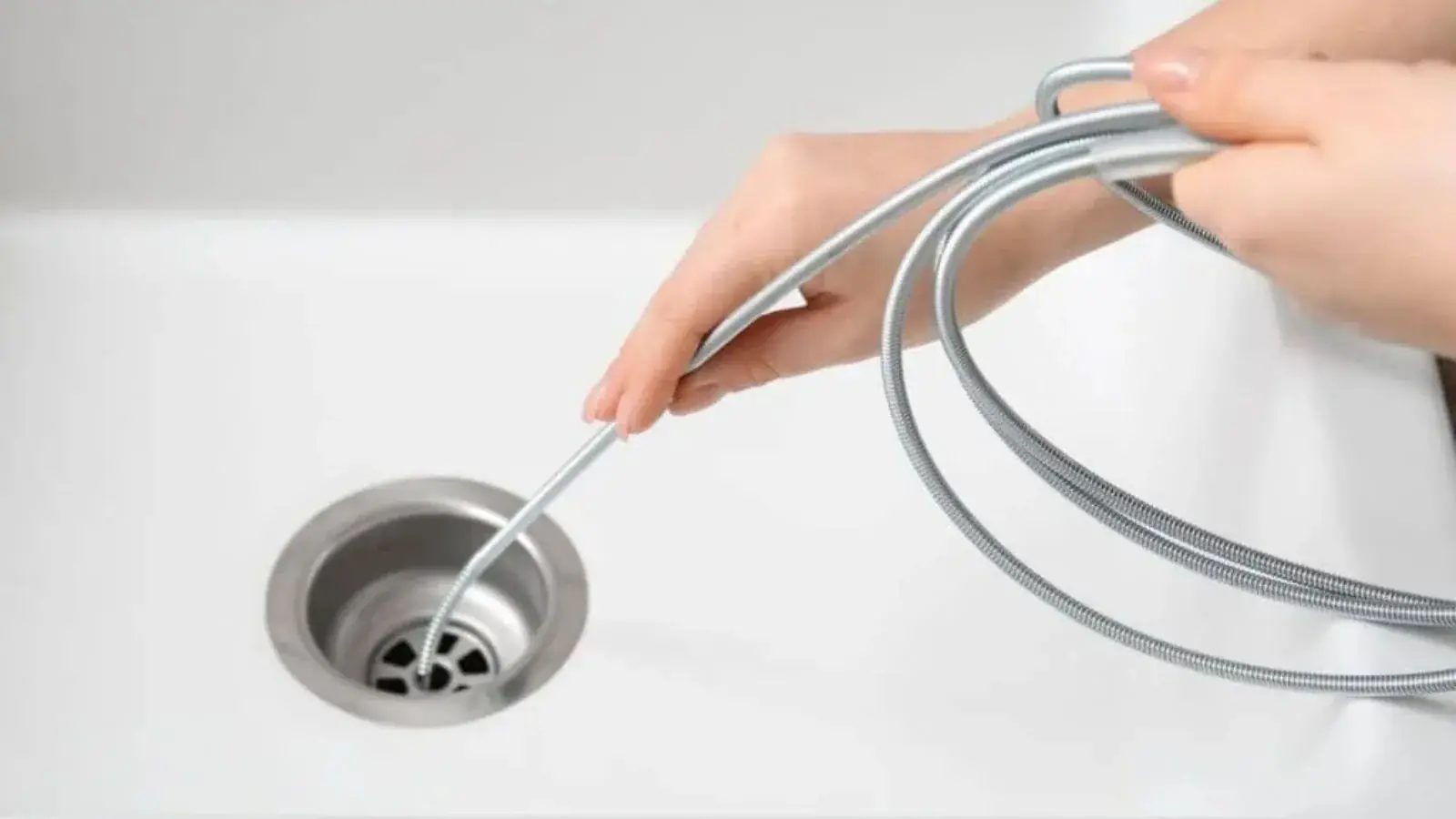
| Hand drain snake | Hair and soap plugs a few feet in | Roots or long grease buildup |
| Drain strainer, prevention | Hair and food scraps before they enter | A clog already formed |
Boiling water: useful, with two cautions
Pouring a kettle of hot water down a kitchen drain can loosen grease that has just started to build up. Pour slowly and in two or three rounds, giving each a few moments to work. Do not expect it to move hair or a wad of paper.
Never pour boiling water into a toilet, because sudden heat can crack porcelain. Be careful with plastic pipes and old joints too, since very hot water can soften them. Use hot tap water first, and keep boiling water for metal pipes you are sure of.
Baking soda and vinegar: a freshener, not a plunger
The foaming reaction looks impressive, but it is mostly carbon dioxide and water, so it does little against a solid blockage. It can lift light film and odor. A half cup of baking soda followed by a half cup of vinegar, left for fifteen minutes and flushed with hot tap water, is as far as it should go.
Plunger and hand snake, step by step
Clearing a single fixture
- 1
Block the overflow
Cover the overflow hole on a sink or tub with a wet rag so the pressure goes down the drain.
- 2
Seal and plunge
Cover the drain with water, seat the plunger flat and push and pull steadily for about twenty seconds.
- 3
Check the flow
If the water drops quickly, run hot water for a minute to carry the rest away.
- 4
Try a hand snake
Feed the cable in, turn the handle to hook the clog, pull it out and discard it in a bag.
- 5
Stop if it fights you
If the cable stops hard or comes out clean and the drain is still slow, the clog is deeper and the tool will not reach it.
When two honest tries do not clear it, call us and we will find the clog.
Call (609) 547-1417What never to mix
People reach for everything under the sink when a drain will not clear, and that is when accidents happen. Some combinations release gas that can hurt your lungs in a closed room.
- Bleach and ammonia, which makes toxic chloramine gas.
- Bleach and vinegar, which makes chlorine gas.
- Any chemical drain cleaner with another cleaner, or with a plunger working on the same clog.
- Two different drain products on the same day, because the first may still be sitting in the pipe.
If a mixing accident happens, leave the room, open windows from the outside if you can, and call 911 if anyone has trouble breathing. Do not try to clean up the spill until the air has cleared.
Why store-bought chemical cleaners are a poor bet
Caustic drain products generate heat and can sit in a pipe that is fully blocked, waiting for someone to put a hand or a snake in. That is a burn risk for you and for the plumber who comes next. They also do little against hair and solid objects, and standing in old pipes they can eat at joints and fittings.
If you have already used one, tell the plumber before they open the trap. It lets them wear the right gloves and eye protection, and it is much better than a surprise. Our drain cleaning technicians ask that question first.
Local note
When the clog may be the tide, not your pipe
New Jersey figures cited in news coverage say water can rise through Atlantic City storm sewers during full-moon high tides and storms, and Rutgers projects 17 to 75 days per year of high-tide flooding by 2030. A drain that slows only at high tide is giving you information.
Check the tide before you start plunging or snaking. If every drain slows at once and it follows the tide, stop adding water and chemicals, and see our guidance on sewer line cleaning for storm-night main-line backups.
When a home remedy is a sign of a bigger problem
A home remedy that works once, then needs repeating every week, means something is catching in the same spot. The remedy is treating the symptom. These signs call for a plumber instead of another round of baking soda.
- More than one fixture is slow or gurgling at the same time.
- A toilet bubbles when you run the washing machine or a sink.
- Water backs up in a tub or floor drain when you flush.
- A sewage smell that comes and goes in the lowest room.
- The clog returns within days of clearing.
- Standing water in a basement floor drain or a cleanout.
Those point to the main line, where a hand snake cannot do the job and roots or a collapsed section may be involved. We use cables and cameras, and for grease or scale a hydro jetting pass. Homeowners in Pleasantville and Egg Harbor Township sometimes find that a drain that was slow for months was a main-line problem.
Quick answers
Rarely. The fizzing is brief and works best on light film and odor. For a real clog, a plunger or hand snake does the work. If you try baking soda and vinegar, flush with hot tap water and do not combine it with any other cleaner.
In metal pipes, usually yes, in two or three slow pours. Never pour it into a toilet, since heat can crack porcelain, and be careful with plastic pipes and older joints. Hot tap water is the safer first step.
They can burn skin, give off fumes and sit in a fully blocked pipe for the next person to meet. They also do not remove hair or solid objects. If you have used one, tell the plumber before they open the pipe.
Never mix bleach with ammonia or with vinegar, and never stack one drain product on top of another. Mixing releases harmful gas. Use one product at a time with windows open, or skip chemicals and use a plunger.
It can. Water can rise through storm sewers during full-moon high tides and storms, and low drains may slow or gurgle. If all fixtures slow with the tide, stop adding water and call a plumber instead of plunging.
Call after two honest attempts, or right away if more than one fixture is slow, a toilet bubbles, or sewage smell shows up. Those suggest a main-line issue that home tools cannot reach.