
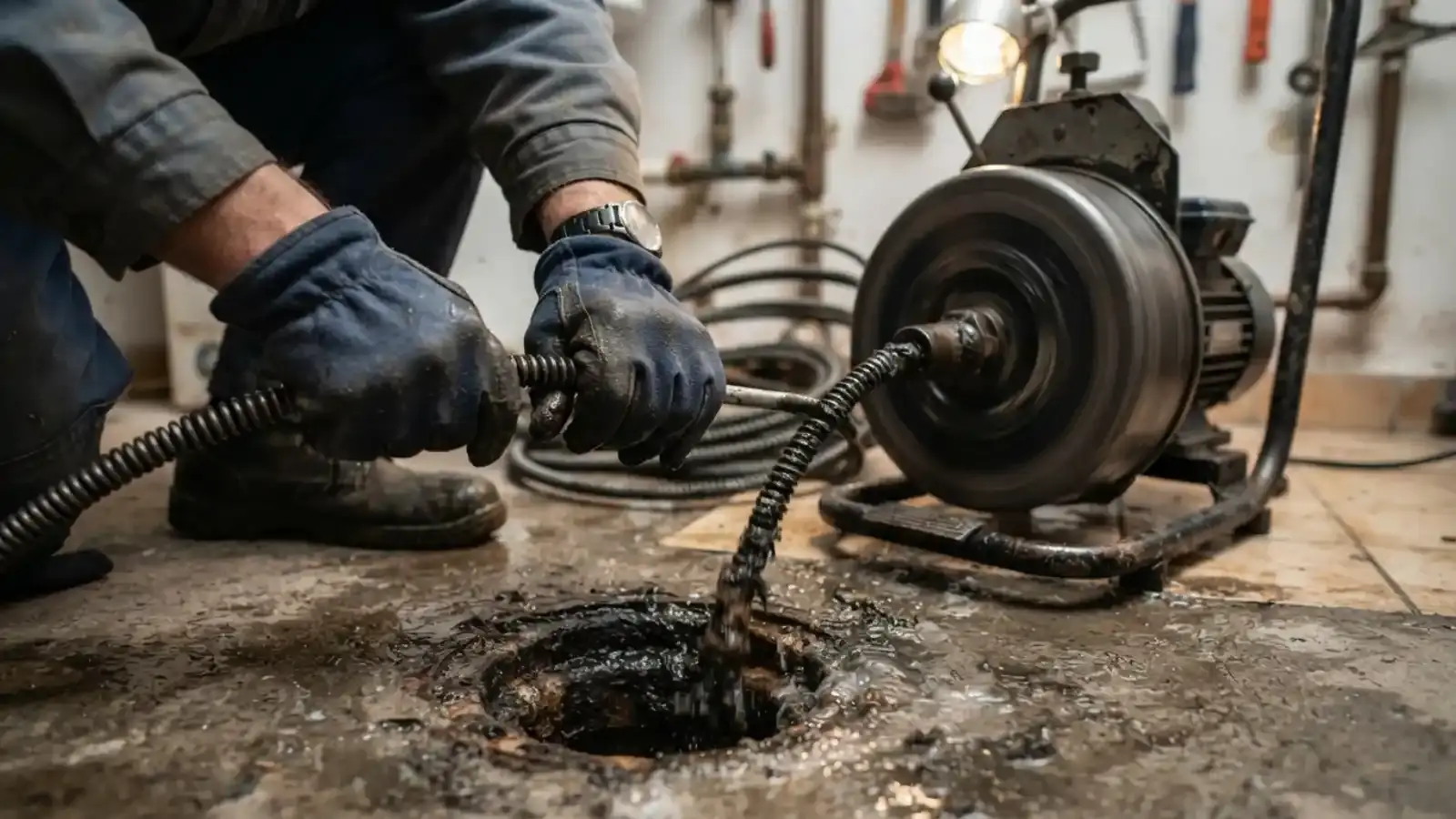
A clog that comes back has a reason
When a clog is cleared and returns in days or weeks, the cleaning was not wrong. It just did not remove the thing that keeps feeding the clog. The pipe may be rough, cracked, tilted or shared, and the plug keeps rebuilding in that same spot.
Keep a note of which fixtures back up, how soon after clearing, and whether it happens after certain activities like laundry or a long shower. That record helps a plumber narrow the cause before the first cable goes in. If a single sink is the only problem, the answer is usually close to the sink. If everything slows, look farther down.
| Cause | Where it shows up | Giveaway |
|---|---|---|
| Kitchen grease | Kitchen sink and the line beyond it | Slow drain, a white or gray crust on the pipe, a bad smell |
| Hair and soap | Tub, shower and bathroom sink | Slow drain that clears for days, then slows again |
| Wipes, including those labeled flushable | Toilet and the building drain | Repeat toilet clogs, ragged mats on the cable |
| Tree or shrub roots | Main sewer line | Slow drains that gurgle, worse in growing months |
| Belly, a low spot in the pipe | Main line | Clog returns in the same place, standing water on camera |
| Broken or offset pipe | Main line | Debris catching at the same joint, soil on the camera |
Grease, hair and wipes: the habit problems
Cooking fat is liquid in the pan and solid in the pipe. It coats the walls a little more each time the water runs, and then food scraps stick to it. Wipe pans with a paper towel before rinsing, and pour cooled fat into a can for the trash.
Hair builds in tub traps with soap as the glue, and a cheap strainer catches most of it. Wipes are different, since they do not break up the way toilet paper does. Even ones labeled flushable can snag on a rough joint and catch everything behind them.
Habit fixes work, but they do not repair a pipe. If you have changed habits and the clogs continue, the pipe itself needs a look. Our drain cleaning visits clear the clog and tell you honestly which kind it was.
Roots and bellies: the pipe problems
Roots find moisture and a tiny crack or open joint, then grow into the pipe as fine threads that catch paper and grease. Cutting them clears the line, but they grow back unless the opening is sealed. A line cleared of roots every few months is a signal, not a routine.
A belly is a section that has sagged so water sits in it instead of draining. Solids settle there, and no cable will stop it from refilling. The camera shows standing water along the bottom of the pipe on a dry day. That one needs a spot repair, not more cleaning.
If the same drain keeps clogging, call us and we will find out why.
Call (609) 547-1417How a camera inspection finds the reason
- 1
Clear first
The line is cleaned enough for the camera to see the pipe wall instead of the clog.
- 2
Feed the camera
A small camera on a flexible cable is pushed through a cleanout and recorded as it travels.
- 3
Mark the findings
The crew notes distances from the cleanout to roots, cracks, offsets and low spots.
- 4
Review together
You watch the footage, so the recommendation is based on what you saw.
- 5
Choose the fix
Options range from a regular cleaning plan to a spot repair or a section of new pipe.
A sewer inspection is the single most useful step for a repeat clog. It turns a guess into a picture, and it stops the cycle of paying for the same cleaning again.
Local note
Atlantic City's mix of buildings changes the question
Atlantic City has roughly 20,000 housing units, and many of them are condominiums, apartments, rowhouses and older single and multi-family homes. That mix means a lot of drains here share a stack or a building line with a neighbor.
So before you decide your pipes are the issue, find out whether the clogged fixture sits on a line shared with other units. Ask your building manager or association, because a clog you clear in your unit may be fed from above or below.
Apartments, condos and shared stacks
In a multi-unit building, a vertical stack carries waste from several units down to the building drain. When a stack clogs, the lowest unit usually backs up first, even if the clog started three floors up. That leaves the ground floor resident with the mess and no control over the cause.
- If several units report slow drains, tell the manager and ask for a stack cleaning, not individual unit visits.
- Check whether the problem fixture is on the lowest floor, where a stack backup shows first.
- Ask the manager who is responsible for the shared line, as it varies by building and by lease.
- Do not pour chemical cleaner into a stack that may feed a neighbor's fixture.
- Keep the camera footage and the invoice for the association or landlord.
- Owners and renters should ask in writing, so there is a record.
Responsibility depends on your lease, your association rules and where the blockage sits, and we do not make those calls for you. We can show where the clog is, and then you and the building can sort out who pays.
Cleaning, jetting or repair: picking the right next step
A cable clears a plug. A jetter scours the pipe wall, which matters for grease and scale, and our hydro jetting service does exactly that. Neither fixes a crack or a sag. The camera result decides which of the three you need, and we explain the clear price before work starts.
If you live in Ventnor City or Galloway Township, ask the plumber to check for roots in particular. Roots are a common reason for repeat main-line clogs, though not the only one.
Quick answers
Because the cause was not removed. Grease, hair or wipes can rebuild quickly in a rough pipe, and roots, a low spot or a broken joint will keep catching debris. A camera inspection shows which one it is.
Not really. They break down far slower than toilet paper and can snag on rough joints, then collect everything behind them. The safest choice is to put wipes in the trash, even if the packaging says flushable.
It shows pipe material, cracks, roots, offsets, standing water from a sag and where the line meets the street connection. You get footage and distances, which lets you compare quotes against real evidence.
It depends on your lease, association rules and where the blockage sits. Many units here share a stack or building line, so tell the manager first and ask who handles shared lines. A camera shows where the clog is.
There is no single schedule. A drain that needs cleaning every few months has a cause worth finding. Once the camera shows what is happening, we can suggest a cleaning interval or a repair, whichever fits.
Yes. Roots enter through small cracks and joints, and they grow back after cutting unless the opening is sealed. Repeat main-line clogs, especially in growing months, are a reason to ask for a camera check.