
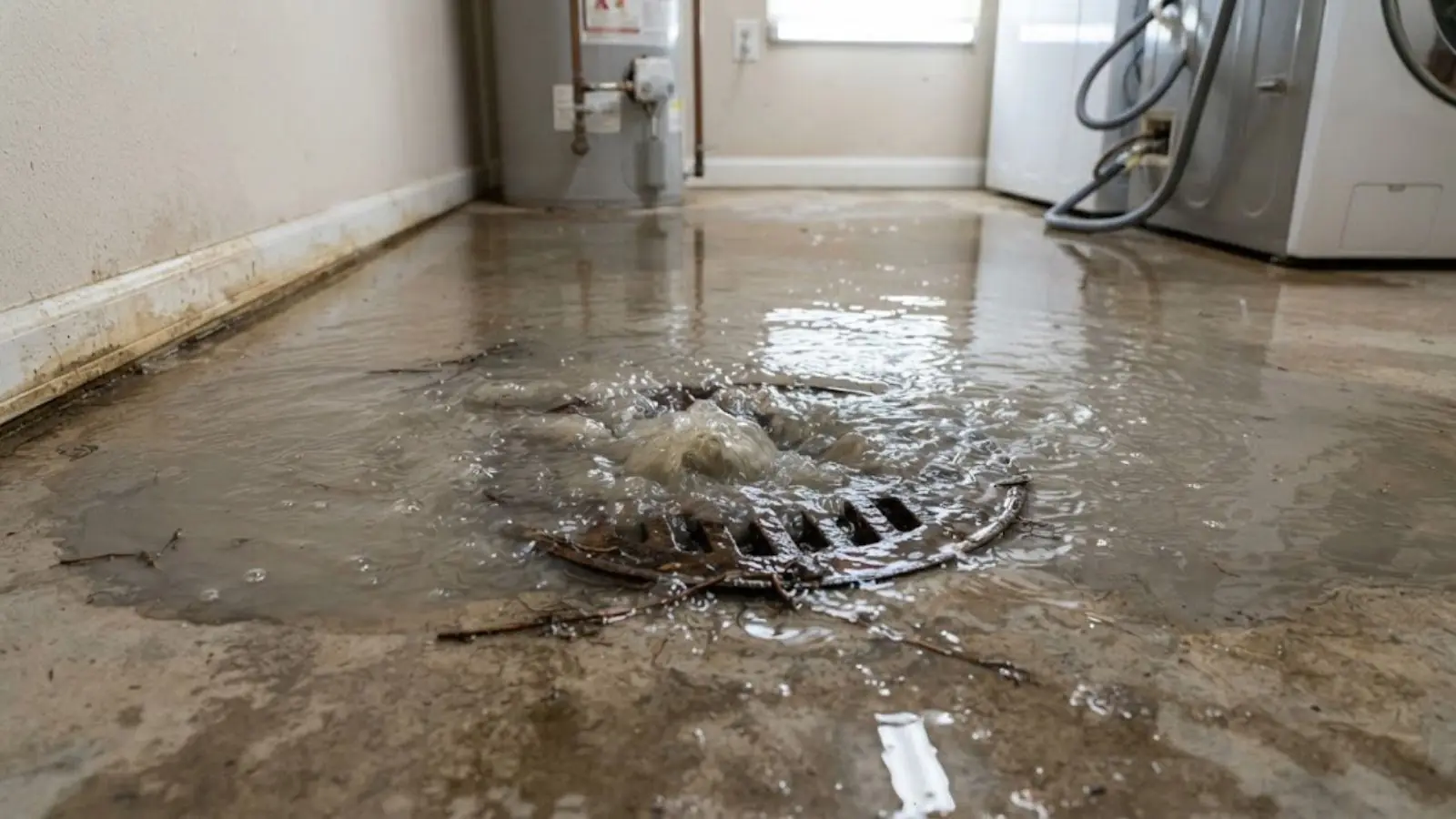
The first few minutes
Sewage carries bacteria, so the first job is to keep everyone away from it. Do the following in this order, and call for help once the immediate hazards are handled.
- Stop using water. No flushing, showers, dishwasher or washing machine until the drains are working.
- Keep children, pets and anyone with a weak immune system out of the affected room.
- If water is near outlets, appliances or a panel, leave the area alone and shut off power only if you can reach the breaker without stepping into water. Call 911 if you cannot.
- If you smell gas, leave the building on foot and call South Jersey Gas at 1-800-582-7060 or 911 before anything else.
- Open windows for ventilation, and photograph the backup for your records and your insurer.
- Call a licensed plumber and, if the street is flooded too, the utilities listed below.
Do not run a plunger or pour a drain product into a backup that happens during a flood. Neither one helps when the water is coming up from somewhere else, and chemicals plus raw sewage make the cleanup more dangerous.
Why the tide and the wind matter here
Atlantic City is low, about 7 feet of elevation, and its storm sewers drain toward water that can itself be high. When a storm surge or an onshore wind holds back-bay water in place, that water does not drain out between tides and can rise over successive tides. Drains meant to flow away can then flow backward.
That is why a backup can appear when it has not rained much. A high tide on a windy day can push water into low pipes, and it often eases as the water drops. If the timing of your backup follows the tide, tell the plumber, since it points away from a simple clog.
| What you see | Points toward your own line | Points toward the street main |
|---|---|---|
| Only one fixture backs up | Likely a branch clog or a fixture trap problem | Unlikely |
| Every drain backs up, upstairs and down | Possible main-line blockage on your property | Possible, especially if neighbors report the same |
| Lowest drain fills first, then clears as the tide falls | Possible if a leak or crack lets water in | Common when street sewers are surcharged |
| Neighbors on the block have the same problem | Unlikely | More likely |
| Backup returns within days after clearing | Roots, a belly or a cracked pipe | Possible, if street lines are still overloaded |
No table can settle it. We do not claim to know who owns the pipe on any particular street, and neither should anyone else without checking. The camera and a call to the utility together give the real answer.
If your drains are backing up right now, call us and tell us what the water is doing.
Call (609) 547-1417Who to call, and in what order
- For electrical danger, a smell of gas or someone feeling unwell from fumes, call 911 first. For gas, South Jersey Gas is at 1-800-582-7060.
- For a street main, a manhole overflowing or a whole block affected, call ACMUA at (609) 345-3315 and the city. Ask them to confirm who is responsible for the sewer under your street before you pay for work.
- For a blockage or break on your own side, call a licensed plumber. Our sewer line cleaning service clears the main line and we can pair it with a camera run.
- For flood damage to the building, photograph everything and call your insurer early. A homeowners policy may respond to a sudden and accidental loss, while wear and upkeep are normally left out, and sewage backup or flood damage often needs its own add-on or policy.
We answer the emergency line any hour and book same-day appointments when available. We cannot clear a city main, and we will say so rather than charge you for work on a pipe that is not yours. If your home is in Ventnor City, the city water and sewer office at 609-823-7935 is the first call about the street line. In Pleasantville, start with your town hall or utility.
Local note
The tide numbers behind a backup
The National Weather Service Mount Holly uses 6.0 ft at the Atlantic City gauge as minor tidal flooding, 7.0 ft as moderate with widespread roadway flooding and 8.0 ft as major with structural damage. Hurricane Sandy peaked at 8.8 ft on October 29, 2012.
A 2022 AFP report citing New Jersey figures says water can rise through Atlantic City storm sewers during full-moon high tides and storms, and that Chelsea Heights streets still flood often. If National Weather Service tide forecasts for Atlantic City call for a high tide near 6 or 7 ft and your backup follows it, do not run water through that tide, and report it to the utility.
Cleaning up without making it worse
Wear rubber gloves and boots, wash your hands afterward, and keep the affected area closed off. Porous materials like carpet, drywall near the floor and cardboard that sat in sewage are usually discarded rather than saved, though an insurer or restoration professional can say what is salvageable.
Do not mix cleaning products. Bleach with ammonia-based products gives off toxic gas, and a closed bathroom makes that dangerous. Use one product at a time with the window open, or leave the sanitizing to a restoration service.
After the water drops
Once the backup is cleared, ask for a camera run. A sewer inspection shows whether the line has roots, a low spot or a crack that lets water into the pipe, which is what separates a one-time storm event from a defect that will repeat.
For buildings that back up repeatedly during storms, ask the plumber whether a backwater valve makes sense. It is a device that closes against reverse flow, but it needs access, regular cleaning and local approval. Ask your construction office what the rules are, since they vary by job.
With high-tide flooding projected by a 2019 Rutgers study to reach 17 to 75 days a year by 2030, a repeat backup is worth fixing at the source instead of clearing it each time.
Quick answers
When tides run high or an onshore wind holds water in place, low storm and sewer pipes may fill from the outside. The water then has nowhere to drain and can push back into low fixtures. Notice the timing and tell your plumber.
That depends on where the blockage sits. A camera run on your own line shows whether it is on your side, and the city or ACMUA at (609) 345-3315 can speak to the street main. We do not guess at ownership.
No. If the water is coming up from a flooded or overloaded line, cleaner will not help, and chemicals mixed with sewage create a hazard for anyone cleaning up. Stop using water and call a plumber.
No. Anything you flush or drain may come up at the lowest fixture. Wait until the plumber says the line is flowing, or until the tide has dropped and the utility confirms the street sewer is clear.
Yes. The emergency line at (609) 547-1417 is answered 24/7, and we offer same-day appointments when available. Tell us whether it is one drain or all of them and whether water is near electrical equipment.
Not automatically. A policy may cover a sudden and accidental loss but leave out wear, upkeep and flooding, and sewer backup is often a separate add-on. Read the wording, take photos and call your insurer before any cleanup starts.