
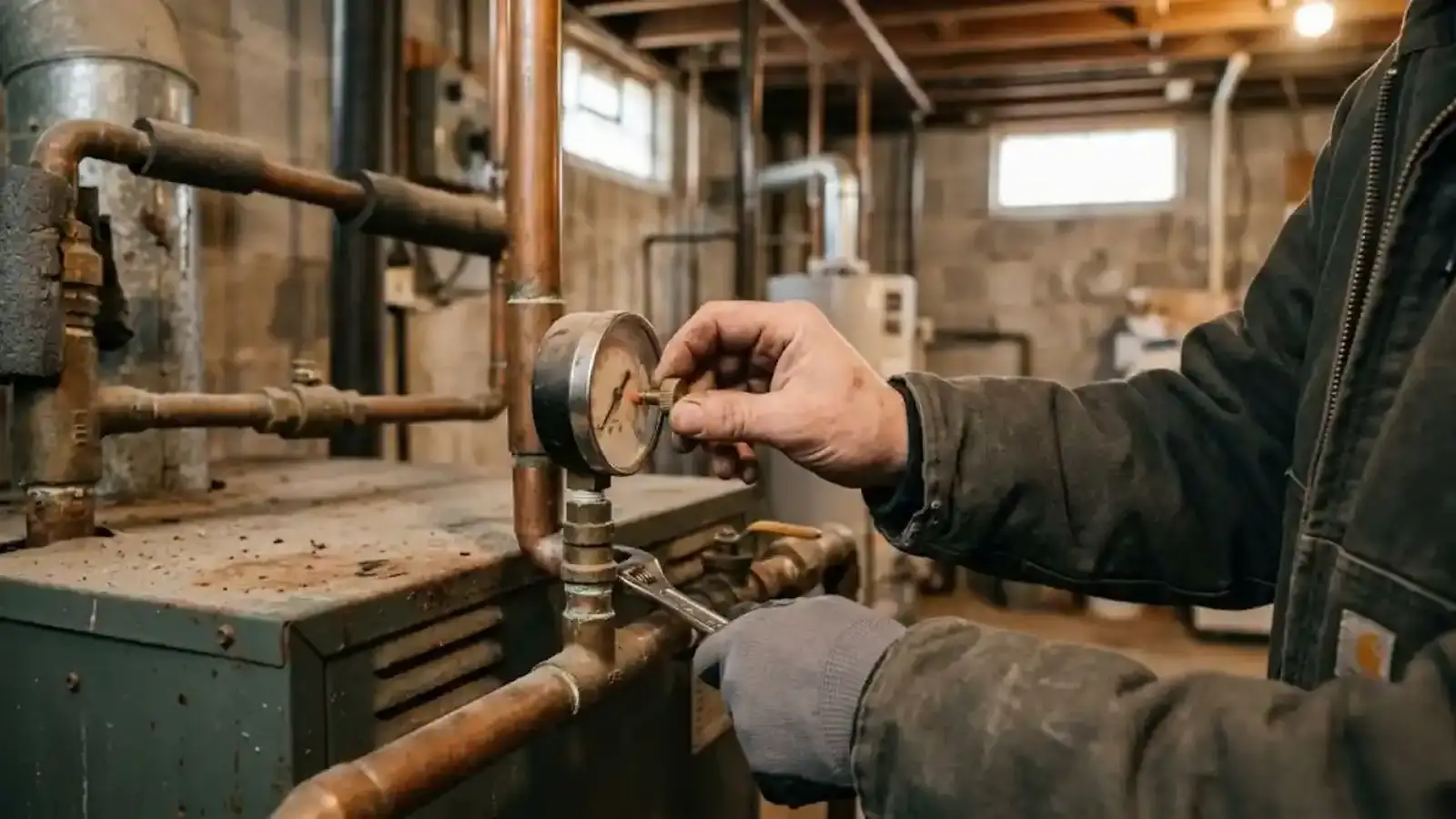
Start with the season, not the breakdown
Winters here are real. Atlantic City International records typically 12 to 18 inches of snow between November and April, and the record low there is -11 F. A boiler that limps through October often quits on the first hard night.
So the best repair is the one you book in the fall. A planned visit lets us find a weak pressure switch, a sticking pump or a slow leak while the weather is mild and parts are easy to get. Same-day appointments are offered when available, and we explain what we find in plain words.
| When | What to do | Why it matters |
|---|---|---|
| September to October | Book a tune-up and test the heat | Faults show up before you need it daily |
| November to December | Bleed radiators and check pressure | Air pockets and low pressure cause cold rooms |
| January to February | Watch for banging, leaks and cold spots | A small fault grows under constant load |
| March to April | Note problems from the season | Fixing them in spring avoids a repeat next winter |
| Summer | Check hot water and shutoffs | Combi and indirect units run all year |
What a boiler visit covers
The order we work in
- 1
Ask which system you have
Hot-water, steam, combi, or a boiler with an indirect tank each fail in different ways, so we confirm which one is in your basement or closet.
- 2
Check pressure and the expansion tank
Pressure that is too high or too low tells us about the fill valve, the relief valve and the tank, usually before we touch the burner.
- 3
Look for leaks
We check the boiler body, the circulator flanges, the relief valve discharge and the visible piping for weeping or rust.
- 4
Test the controls and circulator
We run a heat call and watch the thermostat, the pump, the zone valves and the safeties to see which one stalls.
- 5
Report and price
You get the finding in plain language and a price before any repair starts.
Symptoms and what they usually mean
No heat or cold radiators
If the boiler runs but rooms stay cold, trapped air, a stuck zone valve or a failing circulator are common causes. If the boiler does not fire at all, check that the thermostat is calling for heat, the power switch is on and the pressure reads in a normal range for your unit.
Banging, kettling and noise
A kettle-like rumble often comes from scale or sludge in the heat exchanger. Knocking in pipes can come from air or from a pump running against a restriction. These sounds are warnings, and they usually get worse as the season goes on.
No hot water from a combi or indirect
When the heat works but the taps run cold, the fault may be a diverter, a sensor, a failed indirect tank or a scaled heat exchanger. If the tank is separate, our water heater repair team handles the stand-alone units, including urgent failures.
Leaks and dripping
A wet floor under the boiler means shut off the water feed and the power if you can do it safely, then call. A leaking expansion tank, a failed relief valve and a weeping circulator flange are the usual suspects. Do not keep topping up the pressure, since it hides the leak and feeds corrosion.
Planning your fall tune-up or chasing a noisy boiler? Call and we will find a visit that suits the building.
Call (609) 547-1417Carbon monoxide and gas safety come first
Worth knowing
If you smell gas or your CO alarm sounds
Leave the building on foot and take everyone with you. Do not flip switches, use phones inside or restart the boiler.
Call South Jersey Gas at 1-800-582-7060 or 911 from outside. Do not call a plumber first. Once the utility or fire department says the building is safe, we can look at the boiler.
Carbon monoxide alarms are general home safety equipment, and a working one on each level is a sensible habit for any fuel-burning appliance. A boiler that soots, smells or trips its safeties should be shut down until it is checked. We do not clear a boiler to run again if its venting looks wrong.
Bleeding radiators and baseboards
Air in a hot-water system is a common cause of cold upper floors. With the boiler off and the system cool, open the bleed valve on the radiator slightly with the right key until water spits, then close it. Check the boiler pressure afterward, since bleeding drops it.
If the same radiator needs bleeding every week, the air is coming from somewhere, often a leaking valve or a failing fill. That is a repair, and we find the source. Steam systems do not get bled the same way, so ask us which type you have before opening any valve.
Where repair ends and replacement begins
A cracked heat exchanger, a boiler with repeated leaks at the body, or parts that are no longer made can tip the balance toward replacement. We explain the choice with the facts in front of you and we do not push a new unit when a repair will hold. New equipment and relocation fall under water heater installation and plumbing installation work.
We handle residential and small commercial hot-water and gas boilers. Large commercial boiler plants and oil burner tune-ups are outside our scope, and we will say so on the phone. We serve Egg Harbor Township and other nearby towns. A hidden leak in a heating pipe may call for leak detection.
What affects the cost of boiler repair
Type of boiler
Steam, hot-water and combi units use different parts and need different test steps.
Age and parts supply
Older boilers may need parts that take longer to source or have been replaced by newer designs.
Nature of the fault
A pressure fix is a smaller job than a circulator swap or a heat exchanger repair.
Access and location
A boiler in a tight closet takes longer to service than one in an open basement.
Season and timing
A scheduled fall visit differs from a mid-winter call in demand and in the rate for after-hours work.
Homeowners policies usually cover sudden and accidental water damage, such as a burst heating pipe, but not wear or maintenance. A tune-up is maintenance. Ask your insurer what applies.
Ask for the price first. Call (609) 547-1417.
Questions about boiler repair in Atlantic City
Early fall, before the first cold stretch, is the best time. Parts are easier to get and a visit is easier to book. A tune-up is maintenance, and we check pressure, controls, the circulator and visible piping, then report what needs repair.
Check the boiler pressure and bleed the radiator with the system cool. If it keeps filling with air, the source is probably a leak or a failing valve, and that needs a visit. Do not bleed a steam system, since the method is different.
We handle residential and small commercial hot-water and gas boilers, and we ask what type you have when you call. Steam systems need different parts, so tell us the make if you can. Large commercial plants and oil burner service are outside our scope.
Shut off the water feed and the power if you can do so safely, protect the floor, and call. Do not keep adding pressure to a leaking system. A burst heating pipe is urgent, and an after-hours plumbing call goes to the same dispatch line, which also covers Pleasantville.
Yes, especially with a combi or indirect tank. We check the diverter, the sensor and the tank during the same visit. A stand-alone water heater that has failed completely is a water heater repair call.
A yearly check is a sensible habit for any boiler. The area sees 12 to 18 inches of snow most seasons and has hit -11 F, so a failure at the wrong time is costly. We will not promise a number of seasons a boiler lasts.