Why there is no single price for jetting
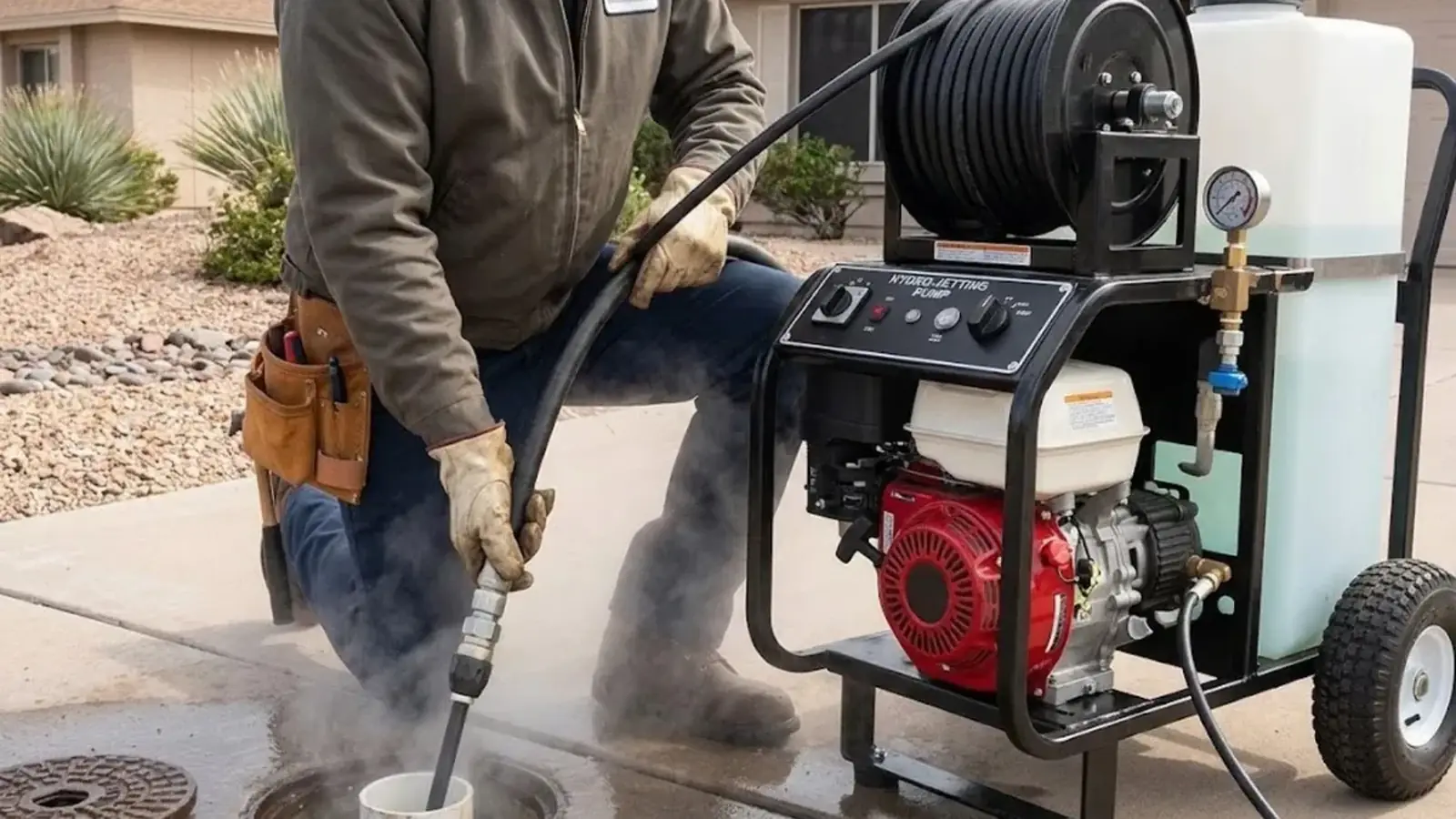
Hydro jetting sends high-pressure water through a hose and special nozzle to scour the inside of a drain or sewer line. The price is set by the job, not the machine. A short kitchen line with grease buildup is a different job from a long main line packed with roots.
When you call, we ask where the clog is, how many fixtures are backing up and whether the line has been cleared before. With those answers we can give a clear price before work starts. Our hydro jetting service explains the method in more detail.
Think of a quote as a description of work, not a single number. Two companies can both say jetting and mean very different visits: one with a camera look and a stated line length, one with neither. Before you compare totals, compare what each total covers, using the questions near the end of this page.
It also helps to separate the clog from the cause. Jetting can clear grease today, but if a bellied pipe holds water and grease settles in the low spot, the clog returns. A fair estimate talks about both the cleaning and the reason the line keeps filling.
What changes a jetting quote
Line length and diameter
A longer or wider line takes more time and water. A 2-inch kitchen branch is a smaller job than a 4-inch building drain.
Access point
A clean-out at ground level is quick. If there is no clean-out, the crew may need to pull a toilet or open a roof vent.
What is in the pipe
Soft grease clears faster than hard scale or dense roots, and some blockages need several passes.
Camera inspection
Looking inside first shows whether jetting is safe. It adds time but prevents blasting a cracked pipe.
Flat or hourly
A flat figure should say what it covers. An hourly figure should say how time is counted, including travel, and whether a return pass is billed again.
Cost also depends on cleanup. Jetting flushes debris downstream, and in a building with a long lateral the crew may need to catch it at a lower clean-out.
| Method | Best for | Cost factors |
|---|---|---|
| Cable (snake) | Single clog near a fixture | Cable length, access, machine size |
| Hydro jetting | Grease, scale, roots along the pipe wall | Hose length, passes, cleanup, access |
| Camera inspection | Finding the cause | Line length, number of access points |
| Spot repair after jetting | Cracks or offsets found by camera | Digging, depth, pipe material |
| Preventive jetting | Restaurants and rentals with repeat clogs | Frequency and building layout |
When jetting is the wrong tool
Jetting cleans pipe. It does not fix pipe. If a line is cracked, collapsed or separated at a joint, high pressure can make the damage worse or push water into the soil. That is why a camera look often comes first, and why we may recommend sewer inspection before we jet.
If the camera shows a broken pipe, the cost picture changes. Repair or lining becomes the main expense, and jetting may only serve as a prep step. We tell you before we continue, and we do not push the machine into a pipe we do not trust.
Pipe material matters too. Cast iron with heavy scale, clay with root joints and plastic with a crushed section all respond differently. Older buildings can hide a mix of pipes behind one wall, so a camera view often saves guesswork.
Local note
Local note: ask who owns the main
Which agency owns the sewer main under a given street is something to ask the city or ACMUA, because it is not the same everywhere in Atlantic City.
What that means for your decision: if jetting reaches the point where your private line meets the main, get the owner's answer first and have it noted on the written quote, so you do not pay for work past your property line.
Call (609) 547-1417 and describe the clog. We will explain what a jetting visit would involve.
Call (609) 547-1417Preparing the property saves money
- Clear a path to the clean-out and make sure it is not buried under soil, mulch or storage.
- Tell us if the clog returned after a recent cable visit, and when.
- Note which fixtures back up, since that points to the branch or main.
- Move vehicles so the truck can reach the access point.
- Keep children and pets indoors, because the hose and water jet are dangerous.
Time is part of any quote. If the crew must hunt for a clean-out or move a heavy appliance, the visit runs longer, so a clear path is worth doing before anyone arrives.
Restaurants, rentals and repeat clogs
Buildings that put grease and food waste down the drain often need jetting on a schedule rather than after every backup. A rental with several tenants may clog more often than a single-family home. Scheduled service is usually easier to plan around than a middle-of-the-night backup.
If you manage a commercial space, our commercial plumbing team can talk through how often your lines need attention. We do not claim a schedule without seeing the layout.
Insurance and who pays
A policy tends to respond to a sudden event, not to upkeep. Clearing grease that builds up over months is upkeep, so plan to pay for it yourself. If a backup ruined flooring, report it to your insurer and ask what the policy says. We can describe what we found in plain language for your claim.
Service reaches beyond the city line. We serve Egg Harbor Township and Pleasantville for jetting as well, with same-day appointments when available.
Questions to ask any company about a jetting price
- Is the price flat or hourly, and if hourly, how is the time counted?
- What exactly is included: how many passes, and is cleanup part of it?
- Does it include a camera look before and after the jetting?
- Does the quote state the line length and the access points it assumes?
- Does travel or the time of the visit change the figure, and is that written down?
- What happens to the price if the camera shows a broken pipe?
- Is the technician licensed and insured, and can I verify the license?
A quote that answers these in writing is easier to compare than a bare total. If a company will not say what the figure covers, treat that as information. We state the scope and give a clear price before work starts, so you can hold the visit to it.
Quick answers
Line length, access, what is in the pipe and the pipe's condition all change the work, and a phone call cannot see them. Once we know your layout we describe the work and give a clear price before work starts.
Usually, yes, because it uses heavier equipment and more water. It also cleans the pipe wall rather than punching a hole through the clog. Whether it is worth it depends on how often the line clogs.
It adds time, but it shows whether the pipe can take jetting and what caused the clog. Skipping it can mean paying twice if the line is damaged.
Usually you do for the cleaning itself, since grease buildup is upkeep. If a sudden backup damaged floors or belongings, that may be a separate claim. Ask your insurer before cleanup, and keep photos and any camera findings.
It can if the pipe is cracked, thin or collapsed. That is why a camera check often comes first, and why we may refuse to jet a line we think will fail.
The method is the same, but many older city buildings have shared or hard-to-reach lines, and the city or ACMUA can tell you who owns the main outside. Tidal flooding can also affect when a crew can reach a site. Our sewer line cleaning page covers whole-building backups.